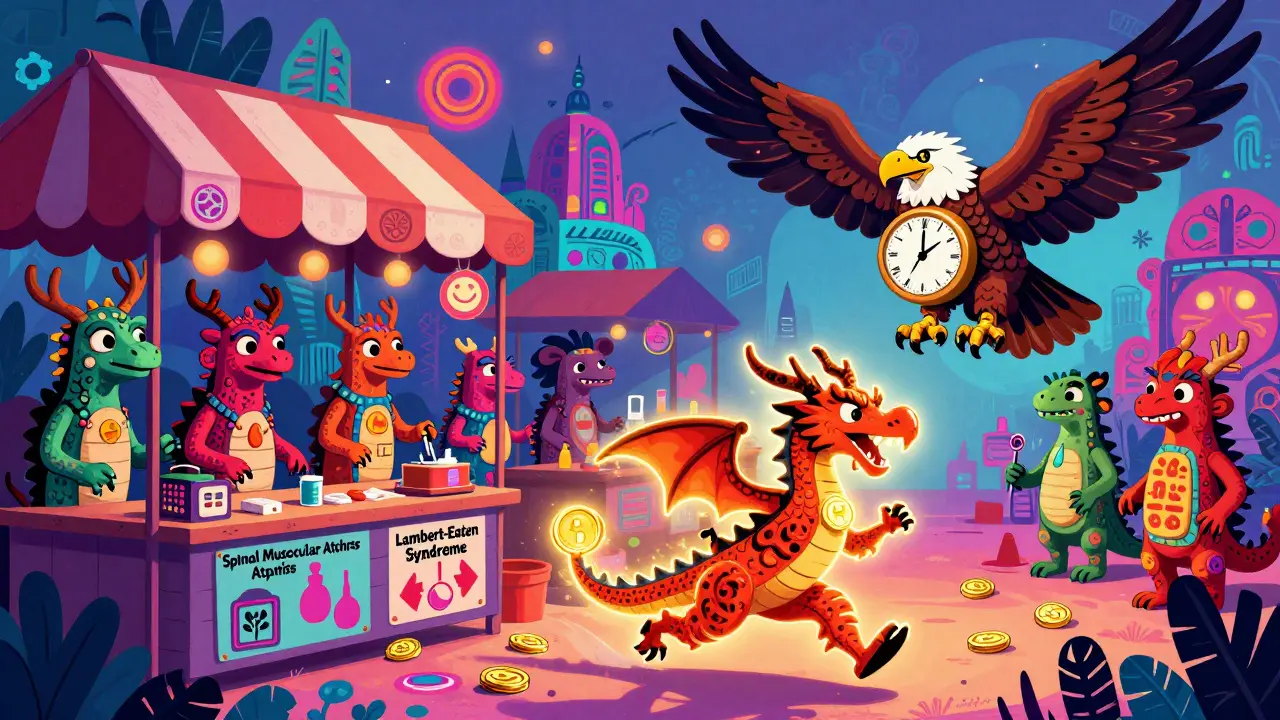
Before 1983, fewer than 40 treatments existed for rare diseases in the U.S. Today, more than 1,000 have been approved. The shift didn’t happen by accident. It was built on a single law: the Orphan Drug Act. This law didn’t just tweak the system-it rewrote the rules for drug development, making it possible for companies to profitably treat conditions that affect as few as 1 in 1,000 people.
What Exactly Is Orphan Drug Exclusivity?
Orphan drug exclusivity is a seven-year period of market protection granted by the FDA after a drug is approved to treat a rare disease. It doesn’t mean the drug is patented-it’s separate. Even if a drug’s patent expires, no other company can sell the same drug for the same rare disease during those seven years unless they prove it’s clinically superior. The FDA defines a rare disease as one affecting fewer than 200,000 people in the U.S. That’s it. No need to prove the disease is deadly, painful, or untreatable. Just small patient numbers. And because the market is tiny, most drugmakers wouldn’t bother developing treatments without this protection. Why spend $150 million to treat 8,000 people if you can’t recoup your costs?How It Works: The First-Mover Advantage
Here’s the key: multiple companies can apply for orphan designation for the same drug and disease. But only the first one to get FDA approval gets the seven-year exclusivity. It’s a race. Think of it like a marathon where everyone lines up at the same starting line, but only the first to cross the finish line gets the prize. For example, if Company A gets approval for a drug called X to treat Disease Y in 2025, Company B can’t get approval for the same drug for Disease Y until 2032-unless they can prove their version works significantly better. That’s called clinical superiority. And it’s hard to prove. Since 1983, there have been only three documented cases where a competitor met that bar. This system creates strong incentives. Biotech startups use orphan exclusivity to attract investors. Big pharma buys smaller companies just to get their orphan-designated drugs. Without this rule, many of these treatments would never exist.Orphan Exclusivity vs. Patents: What’s the Difference?
Most people assume patents are the main way drugs stay protected. But for orphan drugs, that’s often not true. According to IQVIA’s analysis of 503 orphan drugs approved between 1983 and 2018, patent protection was the primary barrier to competition in 88% of cases. Orphan exclusivity was the main one in only 12%. Why? Because many orphan drugs are older molecules. A drug like amifampridine was first approved in the 1990s for a common condition. Later, it got orphan designation for Lambert-Eaton myasthenic syndrome. The patent on the molecule had expired, but the orphan exclusivity kicked in when it was approved for the rare disease. That’s how it stays protected without a patent. The big difference? Patents protect the chemical structure or how it’s made. Orphan exclusivity protects the drug for a specific disease. So if a drug is approved for two conditions-one rare, one common-generics can enter the market for the common use while the original maker keeps exclusivity for the rare one.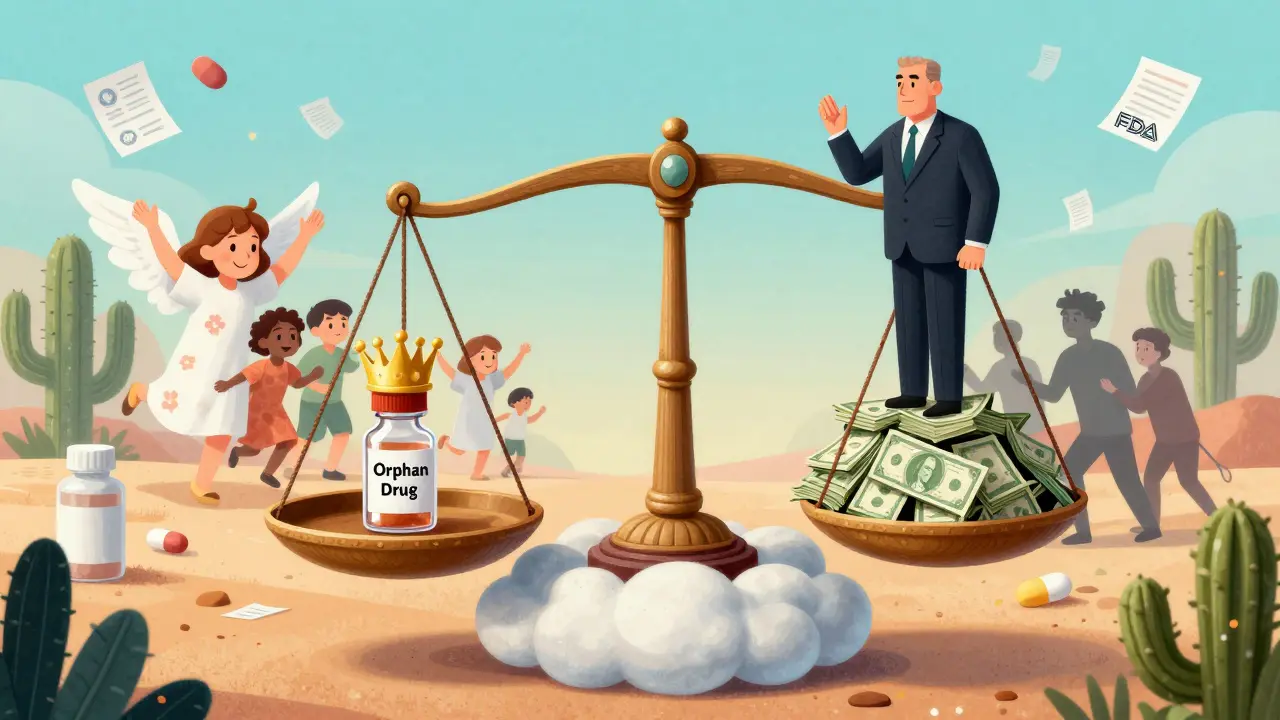
Global Comparison: U.S. vs. EU
The U.S. gives seven years. The European Union gives ten. That’s a big difference. And the EU lets companies extend their exclusivity by two more years if they do pediatric studies. The U.S. doesn’t offer that. The EU also has a way to shorten exclusivity from ten to six years if the drug turns out to be more profitable than expected. The U.S. doesn’t have that safety valve. Critics say the U.S. system is too generous-especially when drugs like Humira, which has billions in sales from common conditions, get orphan designations for rare uses too. But the U.S. system is simpler. No extensions. No reductions. Just seven years. That predictability is why so many companies choose to develop orphan drugs here first.Who Benefits? Patients, Companies, and the System
Patient groups overwhelmingly support the system. A 2022 survey by the National Organization for Rare Disorders found 78% of advocacy organizations call orphan exclusivity “essential.” Without it, they say, new treatments wouldn’t come. Companies rely on it too. A regulatory affairs manager at a mid-sized biotech told a forum in 2022: “Without the seven-year exclusivity, we couldn’t justify spending $150 million on a treatment for 8,000 people.” That’s not an outlier. It’s the norm. The numbers back it up. In 2022, orphan drugs made up $217 billion in global sales-24.3% of the entire prescription drug market. Oncology leads the pack, with nearly half of all orphan approvals going to cancer drugs. But neurology, hematology, and metabolic diseases are growing fast.The Dark Side: Abuse and High Prices
Not everyone sees this as a success story. Critics argue the system is being gamed. Some companies file for orphan status on drugs that already make billions in non-orphan markets. Humira, for example, received multiple orphan designations even though it treats millions of people with autoimmune diseases. That’s legal-but it feels wrong to many. Another issue: pricing. Because there’s no competition during the exclusivity period, companies can set prices very high. One drug for a rare liver disease costs $300,000 a year. The company argues it needs that to fund future research. Patients and insurers say it’s exploitation. The FDA is aware. In May 2023, they issued draft guidance to clarify what counts as the “same drug” when multiple companies apply. That’s a direct response to controversies like Ruzurgi’s approval for LEMS, which raised questions about whether it was truly a new use or just a repurposed version of an existing drug.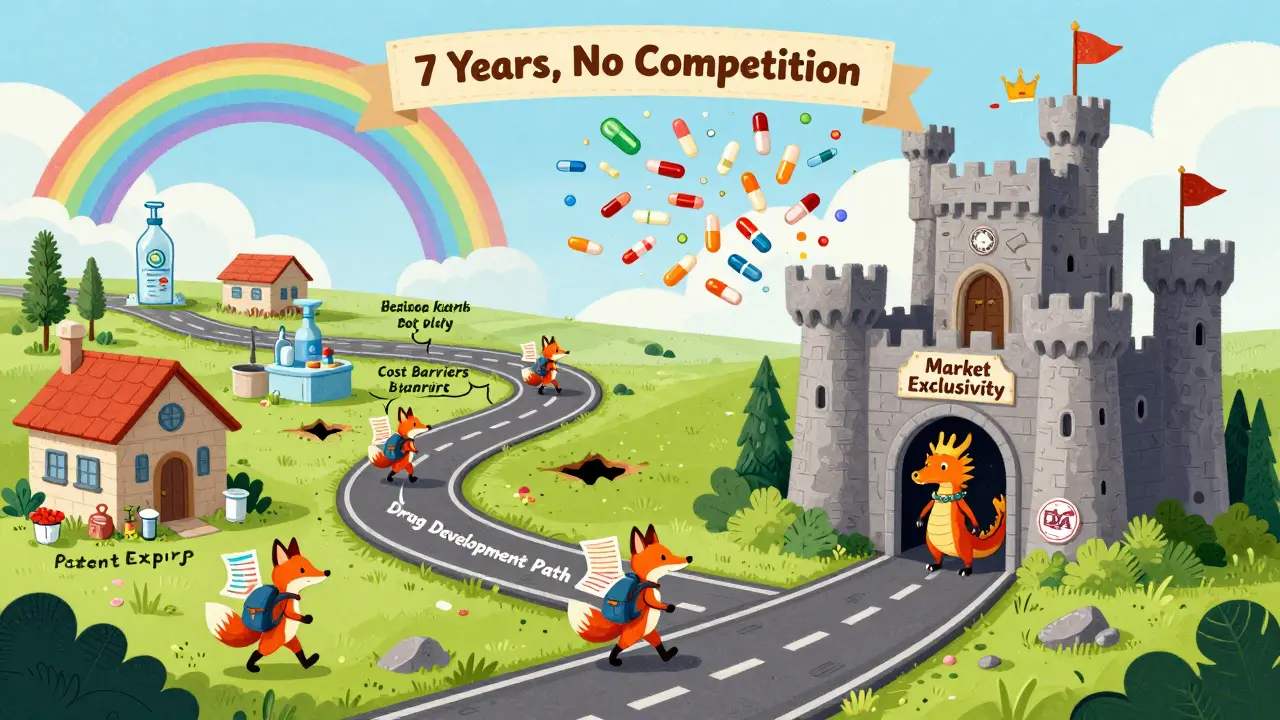
How Companies Play the Game
Smart companies don’t wait until Phase 3 to apply for orphan designation. They file as early as Phase 1 or early Phase 2. Why? Because the clock starts ticking on exclusivity only after approval. The earlier you get the designation, the more time you have to build your case and lock in protection. The FDA approves about 95% of properly filed orphan designation requests. The key is proving the disease affects fewer than 200,000 people. That means doing epidemiological studies, digging into medical records, and sometimes working with patient registries. The process takes about 90 days. And most companies say their interactions with the FDA’s Office of Orphan Products Development are helpful and clear. That’s rare in regulatory affairs.What’s Next for Orphan Drug Exclusivity?
By 2027, Deloitte predicts 72% of new FDA-approved drugs will have orphan designation. That’s up from 51% in 2018. The trend is clear: rare diseases are the new frontier. The EU is considering reducing its exclusivity period from ten to eight years for drugs that become highly profitable. The U.S. hasn’t moved yet. But pressure is growing. Lawmakers are asking: Should a drug that makes $1 billion a year still get seven years of monopoly protection? Still, the industry is united on one thing: orphan exclusivity works. McKinsey’s 2022 survey found 94% of biopharma companies consider it “critical” to their rare disease strategies. And with over 6,500 orphan designations granted since 1983, the system has delivered far more than anyone imagined in 1983.Final Thought: A System That Works-But Needs Oversight
Orphan drug exclusivity isn’t perfect. It’s been stretched, abused, and criticized. But it’s also saved lives. Before 1983, children with spinal muscular atrophy had no treatment. Today, they have multiple. Before 1983, people with cystic fibrosis rarely lived past their teens. Now, many live into their 40s and 50s. The system isn’t broken. But it needs guardrails. Better transparency. Stronger rules against gaming. And a willingness to adjust when drugs become wildly profitable. For now, orphan exclusivity remains the backbone of rare disease drug development. And until something better comes along, it’s the only reason so many of these treatments exist at all.How long does orphan drug exclusivity last in the U.S.?
In the United States, orphan drug exclusivity lasts seven years from the date the FDA approves the drug for the rare disease indication. This period begins only after marketing approval, not when the orphan designation is granted. During this time, the FDA cannot approve another application for the same drug for the same condition unless the competitor proves clinical superiority.
Can a drug have both a patent and orphan exclusivity?
Yes. Most orphan drugs have both. Patents protect the chemical structure or method of use, while orphan exclusivity protects the drug specifically for the rare disease indication. Even if the patent expires, the seven-year exclusivity can still block competitors from selling the same drug for the same rare condition.
What qualifies as a rare disease under U.S. law?
Under the Orphan Drug Act, a rare disease is one that affects fewer than 200,000 people in the United States annually. Alternatively, it can be a condition where the developer cannot reasonably expect to recover research and development costs from sales. The disease doesn’t need to be deadly or untreatable-only small in patient population.
Can generics enter the market during orphan exclusivity?
Generics cannot sell the same drug for the same rare disease during the seven-year exclusivity period. But if the drug has other approved uses-for common conditions-generics can enter the market for those non-orphan uses. For example, a drug approved for both a rare neurological disorder and a common autoimmune condition can have generic versions for the autoimmune use while the innovator retains exclusivity for the rare one.
Why do some companies get multiple orphan designations for the same drug?
Companies can apply for orphan designation for different indications of the same drug. Each new rare disease use gets its own seven-year exclusivity period. This is sometimes called “salami slicing.” For example, a drug approved for one rare cancer can later get a second orphan designation for a different rare cancer, extending its market protection. While legal, this practice has drawn criticism for extending monopolies beyond what was originally intended.
Man, this is wild to see how a law from 1983 changed everything. In India, we don’t have this system, but I’ve seen families struggle for years just to get meds for rare conditions. This kind of incentive might be the only reason these drugs exist at all.
Stop pretending this isn’t corporate welfare. Companies are gaming the system by slapping orphan status on drugs that already make billions. Humira alone rakes in $20B a year and gets orphan designations like it’s a loyalty card. This isn’t innovation - it’s rent-seeking dressed up as compassion.
Seven years is too long. If a drug makes over a billion dollars it should lose exclusivity. Simple. No more excuses. The math doesn’t lie and neither do the patients who can’t afford it.
So let me get this straight - we’re rewarding companies for doing the bare minimum? Develop a drug for 8,000 people, get seven years of monopoly pricing, then cash in while the rest of us pay the tab. And you call this a moral victory? I’m starting to think the real rare disease here is common sense.
This is actually really hopeful. In my family, someone has a rare metabolic disorder and we’ve seen how hard it is to even find a treatment. The fact that 1000+ drugs exist now because of this law? That’s not just policy - that’s hope made legal. Yeah, prices are insane sometimes, but without this, we’d have zero options.
Look i know this sounds harsh but like the whole orphan drug thing is just a loophole that big pharma uses to make money off of people who are desperate and honestly i think we need to cap the price at like 50k a year or something because why should one person get to charge 300k for a pill that costs 200 to make its just wrong
They call it orphan drug exclusivity but really it’s just capitalism playing dress-up as a saint. We’re letting corporations hold patients hostage while they count their billions. The FDA doesn’t regulate greed - it just hands out gold stars to the most ruthless
Wait - so if a drug gets approved for a common condition first, then later gets orphan status for a rare use, generics can still be sold for the common use? That’s brilliant! But then why do companies even bother with the orphan designation if they can just use the existing market? Oh right - because they want to lock in exclusivity on the *small* market so they can jack up the price without competition. This system is a masterpiece of exploitation.
Let’s not pretend this is about saving lives - it’s about control. The FDA approves 95% of orphan designations because the bar is laughably low - fewer than 200,000 people? That’s less than the population of Des Moines. Companies don’t need to prove efficacy or necessity - just numbers. And then they charge $300K a year because they know there’s nowhere else to turn. We’re not curing diseases - we’re creating dependency. This isn’t medicine - it’s a feudal system with IV drips instead of castles.