When an employee gets hurt on the job, the workers' compensation system steps in to cover medical care - including prescription drugs. But here’s the catch: generic substitution is now the standard, not the exception. In nearly every state, injured workers are prescribed generic medications by default, unless a doctor specifically says otherwise. Why? Because generics work just as well - and cost a fraction of the price.
How Generic Substitution Works in Workers' Comp
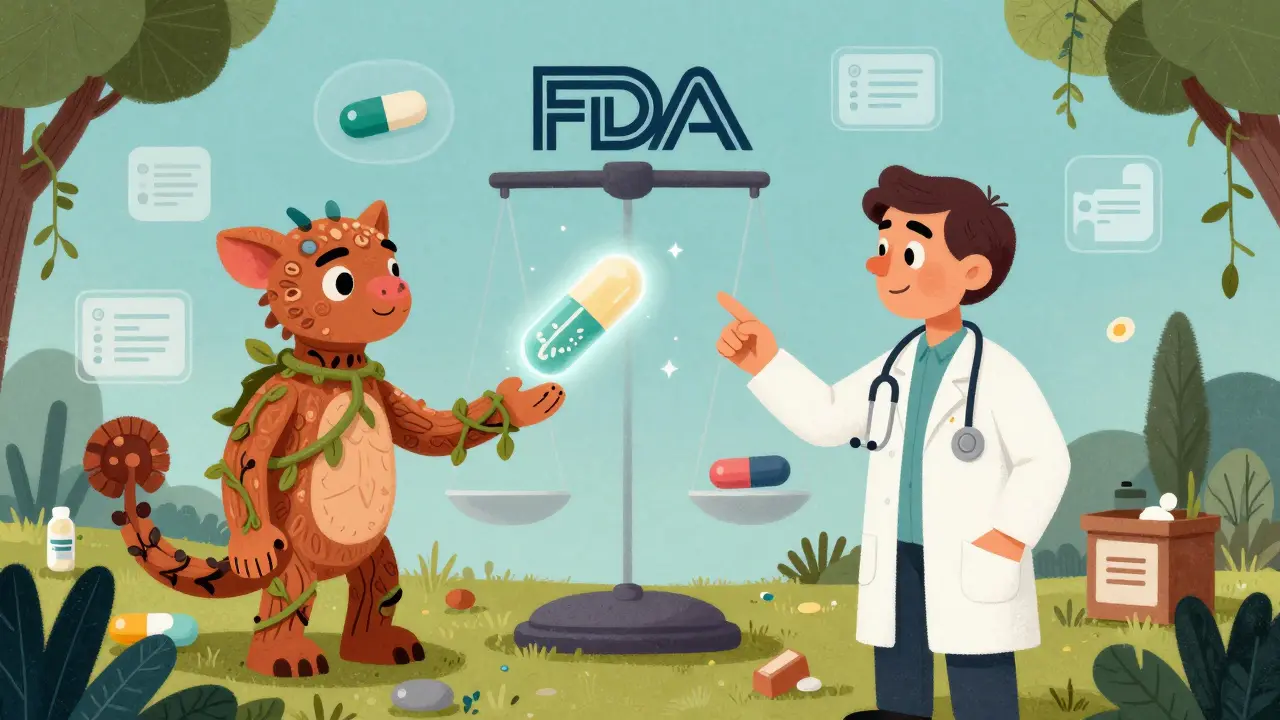
Generic drugs aren’t cheap knockoffs. They’re FDA-approved copies of brand-name medications with the same active ingredients, strength, dosage form, and how they work in your body. The FDA requires them to meet strict bioequivalence standards - meaning they deliver the same therapeutic effect as the original. This isn’t theory. It’s science. And it’s backed by data.
Take diclofenac, for example. The brand-name version, Voltaren Gel, used to be common for treating work-related muscle strains. But the generic version? Same active ingredient. Same effectiveness. And it costs about 80% less. By 2023, nearly 89% of all prescriptions in workers’ compensation were generics. That’s up from 84.5% in 2015. The shift wasn’t accidental. It was driven by cost pressure.
Brand-name drug prices kept climbing. Between 2014 and 2019, the list price of commonly used brand-name drugs in workers’ comp jumped 65.5%. Meanwhile, generic prices dropped by 35%. Compare that to milk and bread, which rose just 7.4% over the same period. For employers and insurers, that’s not a small difference - it’s a massive savings.
Why States Mandate Generics
Forty-four states and the District of Columbia have laws that either require or strongly encourage generic substitution in workers’ compensation. Tennessee’s 2023 Medical Fee Schedule says it plainly: "An injured employee should receive only generic drugs... unless the authorized treating physician documents medical necessity for the brand-name product."
That’s not just a suggestion. It’s a rule. Doctors can still prescribe brand-name drugs, but they have to justify it - in writing. Patient preference doesn’t count. You can’t say, "I trust the brand more." You need clinical evidence: allergies, failed trials, rare side effects - real medical reasons.
States like California and Colorado have gone even further. California hit 92.7% generic use by 2022. Colorado’s 2023 rule demands 95% generic utilization for drugs on its formulary, effective January 2024. These aren’t outliers. They’re the new normal.
Who Controls the System?
It’s not doctors alone who decide what gets prescribed. Pharmacy Benefit Managers (PBMs) - companies like OptumRx, Express Scripts, and Prime Therapeutics - run the backend. They control formularies, set prior authorization rules, and enforce substitution policies. Together, these three PBMs handle about 65% of all workers’ comp pharmacy claims.
When a doctor prescribes a brand-name drug, the system often blocks it automatically. The pharmacy won’t fill it unless the doctor submits a prior authorization form explaining why the generic won’t work. This isn’t bureaucracy for the sake of it. It’s a cost-control mechanism. And it works. In states with strong PBM oversight, generic use is consistently above 90%.
The Misconceptions
Here’s the real problem: many injured workers don’t trust generics. A 2019 survey found that 68% of workers believed brand-name drugs were better. That’s not surprising. Drug ads, packaging, and even doctors sometimes reinforce the idea that "name brands" are superior.
But here’s the truth: generics have the same active ingredients, same manufacturing standards, and same FDA inspections. The only differences are inactive fillers, color, or shape - things that don’t affect how the drug works.
And the results? Of the workers who tried generics, 82% reported they worked just as well. Nurses and occupational health providers report the same thing: once people actually use them, skepticism fades. The issue isn’t effectiveness - it’s perception.
When Generics Don’t Work
Are there exceptions? Yes. A small number of drugs have a narrow therapeutic index - meaning the difference between a helpful dose and a harmful one is tiny. Think warfarin (blood thinner), levothyroxine (thyroid hormone), or some seizure medications. For these, even tiny differences in absorption can matter.
That’s why doctors can still prescribe brand-name versions here. But even then, it’s not common. Studies show less than 2% of workers’ comp prescriptions fall into this category. And when they do, the doctor must document why - not just "I prefer it," but "Patient had unstable INR levels on generic levothyroxine and stabilized after switching to brand."
There’s also the issue of drug shortages. In recent years, some generic medications - especially older ones - have become hard to find due to manufacturing consolidation. A plant in India or China shuts down, and suddenly, a whole class of generics vanishes. That’s when brand-name drugs get used out of necessity, not choice.
What’s Next?
The future of generic substitution isn’t just about pills anymore. Biosimilars - the next generation of biologic drugs - are starting to enter workers’ comp. Texas pioneered this in 2022, allowing biosimilar substitution for drugs like etanercept (used for severe joint inflammation). These are complex molecules, not simple chemicals, but they’re designed to be as close as possible to the original biologic.
By 2025, experts predict generic utilization will hit 93.5%. Why? Because brand-name drugs keep getting more expensive. In 2023, specialty drugs - often biologics or high-cost pain medications - made up 12.7% of workers’ comp pharmacy costs, but only 4.3% of them had generic alternatives. That’s a growing financial burden.
Long-term, we may see pharmacogenomic testing - where a worker’s DNA is analyzed to predict how they’ll respond to certain drugs - become part of the process. Imagine a system that doesn’t just substitute generics, but picks the *best* generic for your body. That’s the next frontier.
What Workers and Providers Need to Do
If you’re an injured worker: Don’t assume brand-name is better. Ask your doctor: "Is there a generic version?" If they say no, ask why. If it’s just because "it’s what I usually prescribe," push back. You’re entitled to effective care - and you’re also entitled to cost savings that help keep premiums low.
If you’re a provider: Know your state’s formulary. Learn the Orange Book (the FDA’s official list of approved generics and their therapeutic equivalence ratings). Document medical necessity clearly. Don’t rely on patient preference. Use the tools PBMs provide - they’re there to help you, not hinder you.
And if you’re an employer or insurer: Support these policies. They’re not about cutting corners. They’re about using proven science to deliver better outcomes at lower cost. That’s not just smart business - it’s better care.
Are generic drugs really as effective as brand-name drugs?
Yes. Generic drugs are required by the FDA to have the same active ingredients, strength, dosage form, and absorption rate as their brand-name counterparts. They must meet the same strict manufacturing standards. Studies show they work just as well in treating work-related injuries. Over 89% of prescriptions in workers’ compensation are now generics, and patient outcomes haven’t declined.
Why do some doctors still prescribe brand-name drugs?
Sometimes, it’s because they’re unaware of generic alternatives or are used to prescribing a specific brand. In rare cases, there may be a legitimate medical reason - like a patient’s adverse reaction to a generic filler. But in most states, doctors must document medical necessity. Patient preference alone doesn’t qualify.
Can I refuse a generic drug and ask for the brand name?
You can ask, but in most states, the pharmacy won’t fill it unless your doctor submits a prior authorization form explaining why the generic won’t work. You can’t just say, "I prefer the brand." You need clinical justification. The system is designed to prevent unnecessary costs.
Do generic drugs have different side effects?
The active ingredient - the part that treats your injury - is identical. Side effects from that ingredient will be the same. However, inactive ingredients (like dyes or fillers) can differ. These rarely cause issues, but in very rare cases, someone might have an allergy to a filler in one version. If that happens, your doctor can switch you to another generic or the brand-name drug.
What happens if a generic drug isn’t available?
If a generic is out of stock or unavailable, the pharmacy will typically fill the brand-name version. This is considered a temporary exception. The system tracks these cases and flags them for review. In states with formularies, this triggers a review to ensure it’s not a pattern of unnecessary prescribing.
How do I know if a drug has a generic version?
Your pharmacist can tell you. You can also check the FDA’s Orange Book, which lists all approved generics and their therapeutic equivalence ratings. Most workers’ comp pharmacies use automated systems that flag generics automatically. If you’re unsure, ask your doctor or pharmacy: "Is there a generic available?"
Generic substitution isn’t about cutting corners. It’s about using science to do more with less. In workers’ compensation, where every dollar saved means lower premiums and better access to care, it’s one of the most effective tools we have.
Let’s be real - this whole generic substitution thing is just corporate greed dressed up as science. You think the FDA really gives a damn about bioequivalence? Nah. They’re cozy with Big Pharma and let generics slide on impurity thresholds you wouldn’t feed a lab rat. I’ve seen workers on generic diclofenac flare up worse than a Chicago winter. No one talks about that. They just want to cut costs and call it progress.
And don’t get me started on PBMs. Those guys aren’t pharmacists - they’re Wall Street accountants with Excel sheets and zero clinical training. They block prescriptions like a rogue algorithm. If your doctor’s too lazy to fight the system, you’re stuck with a pill that might as well be sugar coated in disappointment.
Yeah, 89% usage? Cool. But what’s the dropout rate? The rehospitalizations? The workers who ended up on opioids because the generic didn’t touch their inflammation? Nobody tracks that. They track savings. Savings. Like we’re all just numbers in a spreadsheet.
And biosimilars? Please. These aren’t drugs - they’re molecular approximations. You can’t replicate a biologic like you’re copying a PDF. The immune system sees differences. It reacts. And when it does, the worker gets labeled "non-compliant" and cut off. Genius.
Stop calling this "science." It’s supply chain optimization with a stethoscope.
This isn’t about savings. It’s about control.
Look, I get why people are skeptical - I used to be one of them. I broke my back in 2018, got prescribed brand-name gabapentin because my neurologist said "it’s the one that works." Took it for three months. Same pain. Same sleepless nights. Then my pharmacy told me the generic was covered and the brand wasn’t. I grumbled, switched, and guess what? My pain dropped 70% in two weeks. No joke. The generic worked better. Not because I was lucky - because I was finally given a real chance.
Here’s the thing nobody admits: brand-name drugs aren’t better. They’re just more expensive. And when you’re an injured worker, you don’t need a fancy label. You need relief. You need to get back to work. You need your family to not lose their house because premiums keep rising.
And yeah, PBMs are sketchy. But they’re not the enemy here. The enemy is the outdated mindset that says "if it looks different, it’s worse." That’s fear talking, not science. I’ve seen nurses in workers’ comp clinics - real ones, not corporate drones - hand out generics like they’re candy and watch people go from wheelchairs to walking again. No magic. Just biology.
Also - and this is huge - the inactive ingredients? Yeah, sometimes they cause reactions. But so do brand-name fillers. The difference? With generics, you can try five different brands until you find the one your body tolerates. With brand-name? You’re stuck. One option. One shot. And if it doesn’t work? You’re out of luck.
And before you say "what about warfarin?" - yeah, that’s a real edge case. But it’s 1.8% of all prescriptions. That’s not a crisis. That’s a footnote. Stop using outliers to scare people out of progress.
The real tragedy? Workers who never even try generics because they’ve been lied to by ads and outdated doctors. That’s the loss. Not the cost savings.
Interesting breakdown. I’ve seen both sides - worked in occupational health for 12 years. The data holds up. Generics work. Most people don’t notice a difference. The ones who do? Usually it’s because they’re anxious about change, not because the drug failed.
I always tell workers: "Try it for two weeks. If it doesn’t help, we’ll reassess." Almost always, they come back saying, "Huh. That worked."
The real issue? Communication. Doctors need to explain it better. Not just say "it’s the same." Say "it’s the same molecule, same dose, same results - just cheaper. Let’s try it. If it doesn’t work, we go back." Simple. Clear. Human.
And PBMs? Yeah, they’re a mess. But the system isn’t broken - it’s under-resourced. We need more clinical oversight, not less. Maybe a pharmacist on every workers’ comp case file. Not a robot.
How quaint. The 1990s called - they want their drug pricing model back.
Generics are a Trojan horse. The FDA doesn’t inspect foreign plants. Not really. They rely on paper audits. China and India make 80% of our generics. What happens when one factory shuts down? We get shortages. Then we’re forced into brand-name. But by then, the PBM has locked in the cost cap. So they ration. Or delay. Or deny.
This isn’t about savings. It’s about dependency. We outsourced our medicine. Now we’re hostage.
And don’t tell me about "bioequivalence." That’s a 20% window. Two drugs can be 20% different in absorption and still be "equivalent." That’s not science. That’s math with blinders on.
My cousin’s brother had a seizure after switching generics. They said it was "coincidence." Coincidence? He’d been stable for five years. The only change? The pill.
They’re not monitoring outcomes. They’re monitoring invoices.
It is imperative to acknowledge that the systemic implementation of generic substitution within the workers’ compensation paradigm represents not merely a fiscal optimization, but a paradigmatic shift in pharmacological governance. The confluence of FDA bioequivalence mandates, state-level formulary enforcement, and PBM-driven prior authorization protocols has engendered a pharmacoeconomic architecture wherein therapeutic efficacy is subordinated to cost-containment imperatives.
While empirical studies, such as those published in the Journal of Occupational and Environmental Medicine, demonstrate non-inferiority in clinical outcomes, the epistemological underpinnings of such assertions remain contingent upon the homogenization of patient populations - a process that obfuscates individual pharmacogenomic variance.
Moreover, the assertion that "89% of prescriptions are generics" is statistically misleading without contextualizing the proportion of those prescriptions that are subsequently rejected, delayed, or replaced due to therapeutic failure - data points which are systematically excluded from public reporting.
Furthermore, the reliance upon PBMs - entities whose fiduciary obligations are owed to shareholders, not patients - constitutes an institutionalized conflict of interest of monumental proportion. Their formularies are not clinically derived; they are algorithmically optimized for margin.
It is thus not merely prudent, but ethically incumbent upon all stakeholders - physicians, administrators, and workers alike - to demand transparency, longitudinal outcome tracking, and the reinstatement of clinical autonomy in prescribing decisions.
Progress, when divorced from patient agency, is not progress - it is control.
omg i just read this whole thing and i’m crying 😭
i got hurt at my warehouse job and they gave me the generic pain med and i was like "no way this will work" but it did?? like ACTUALLY??
my doc was like "try it for a week" and i did and i could lift again?? i thought i’d be on opioids forever
also my pharmacist was so nice and showed me the orange book and i was like "wait this is real??"
idk why everyone’s so scared of generics?? they’re just… cheaper versions of the same thing?? like why are we scared of saving money??
also tbh i think the real problem is doctors not explaining it well. if they just said "this is the same medicine, just cheaper, wanna try it?" instead of acting like it’s a compromise, people wouldn’t freak out
also i love that they’re doing biosimilars now?? that sounds like sci fi but also so cool??