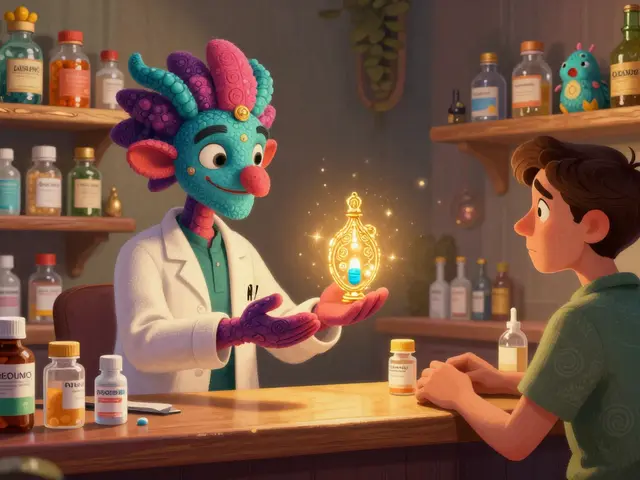
You sit in the pharmacy waiting for your prescription. The pharmacist hands you a pill that looks different from the one you’ve taken for years. It’s cheaper, but it’s also a generic version of your brand-name medication. Do you take it? Most people do because doctors and regulators say generics are safe. But what if your body reacts differently?
This is the core question behind decades of clinical research on brand-to-generic switches. For most medications, the answer is reassuring: generics work just as well. However, for specific groups of drugs-especially those with a narrow therapeutic index-the story gets complicated. Understanding these nuances can mean the difference between stable health and unexpected side effects.
The Science Behind the Swap: Bioequivalence Explained
To understand why some switches cause issues, we first need to look at how generic drugs get approved. In the United States, the Food and Drug Administration (FDA) requires generic manufacturers to prove bioequivalence. This doesn’t mean the pills are identical in every way. Instead, it means they must deliver the same amount of active ingredient into your bloodstream within the same timeframe as the brand-name drug.
Here is where the math gets tricky. The FDA allows a 90% confidence interval falling between 80% and 125% of the brand-name product’s pharmacokinetic parameters. In plain English, this means a generic pill could absorb up to 20% faster or slower than the original brand. For most drugs, like antibiotics or pain relievers, this variance doesn’t matter. Your body handles the slight fluctuation without issue.
However, for drugs with a narrow therapeutic index (NTI), small changes in blood concentration can lead to serious problems. NTI drugs have a very thin line between being effective and becoming toxic. If the generic absorbs slightly slower, you might not get enough medicine, leading to treatment failure. If it absorbs faster, you risk toxicity. This regulatory gap is the root cause of many patient concerns.
When Generics Shine: Cardiovascular and Chronic Conditions
Despite the fears surrounding NTI drugs, the vast majority of clinical studies show that generics are safe and effective for common chronic conditions. A landmark 2020 study published in Nature Scientific Reports analyzed data from 8.5 million insured persons in Austria. The researchers looked at 17 different medications used for hypertension, heart failure, high cholesterol, and diabetes.
| Medication Class | Key Finding | Risk Ratio (Generic vs. Brand) |
|---|---|---|
| Simvastatin (Cholesterol) | Fewer deaths with generic | 0.78 |
| Atorvastatin (Cholesterol) | Fewer deaths with generic | 0.85 |
| Bisoprolol (Blood Pressure) | Potentially worse outcomes with generic | >1.0 |
| Anti-hypertensives (General) | Better adherence with generics | RR 1.23 higher discontinuation for brands |
The results were striking. After adjusting for patient factors, generic formulations were associated with significantly fewer deaths in 10 of the 17 drugs studied. For statins like simvastatin and atorvastatin, patients taking generics had lower mortality rates. Why? Partly because generics are cheaper. When patients can afford their medication, they stick to it. The study found that branded anti-hypertensive medications had a 23% higher relative risk of treatment discontinuation compared to generics. In other words, cost savings led to better adherence, which saved lives.
Dr. Choudhry, a researcher cited in Harvard Health analyses, noted that "the existing data are reassuring." For the average person managing high blood pressure or cholesterol, switching to a generic is not just safe-it’s often beneficial due to improved access and affordability.
The Danger Zone: Antiepileptics and Narrow Therapeutic Index Drugs
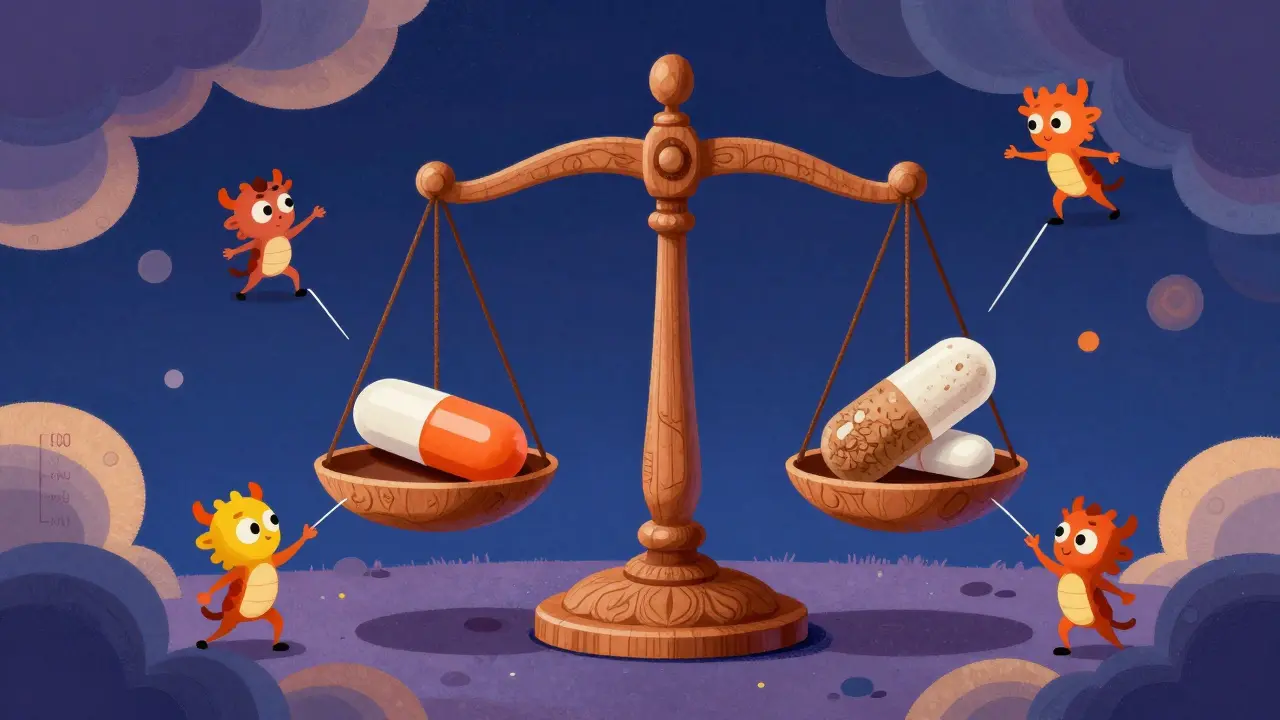
While cardiovascular drugs generally favor generics, neurological medications tell a different story. Epilepsy treatment relies heavily on maintaining steady drug levels in the brain. Even minor fluctuations can trigger seizures. This makes antiepileptic drugs (AEDs) a prime example of narrow therapeutic index medications.
A retrospective review of 760 epileptic patients highlighted significant risks. Many patients switched from brand-name levetiracetam to generic versions experienced increased seizure frequency. More alarmingly, adverse events spiked. Patients reported blurred vision in 18.7% of cases, headaches in 24.3%, and mood swings in 11.4%. Some even experienced aggression and memory loss. Because of these issues, a significant number of patients required switching back to the original brand-name drug.
Phenytoin, another common antiepileptic, shows similar patterns. Therapeutic drug monitoring revealed that generic phenytoin formulations resulted in plasma drug levels 22% to 31% lower than brand-name equivalents. Lower levels mean less protection against seizures. A survey referenced in clinical literature found that nearly half of patients who had breakthrough seizures after switching to generics had measurably lower serum drug levels compared to when they were stable on the brand.
The American Academy of Neurology acknowledges this complexity. Their position statement advises that while most epilepsy patients can use generics safely, physicians must monitor those who experience problems. They may need to check drug levels more frequently or consider staying on the brand-name product if stability is compromised.
The Hidden Cost of Switching: Adherence and Confusion
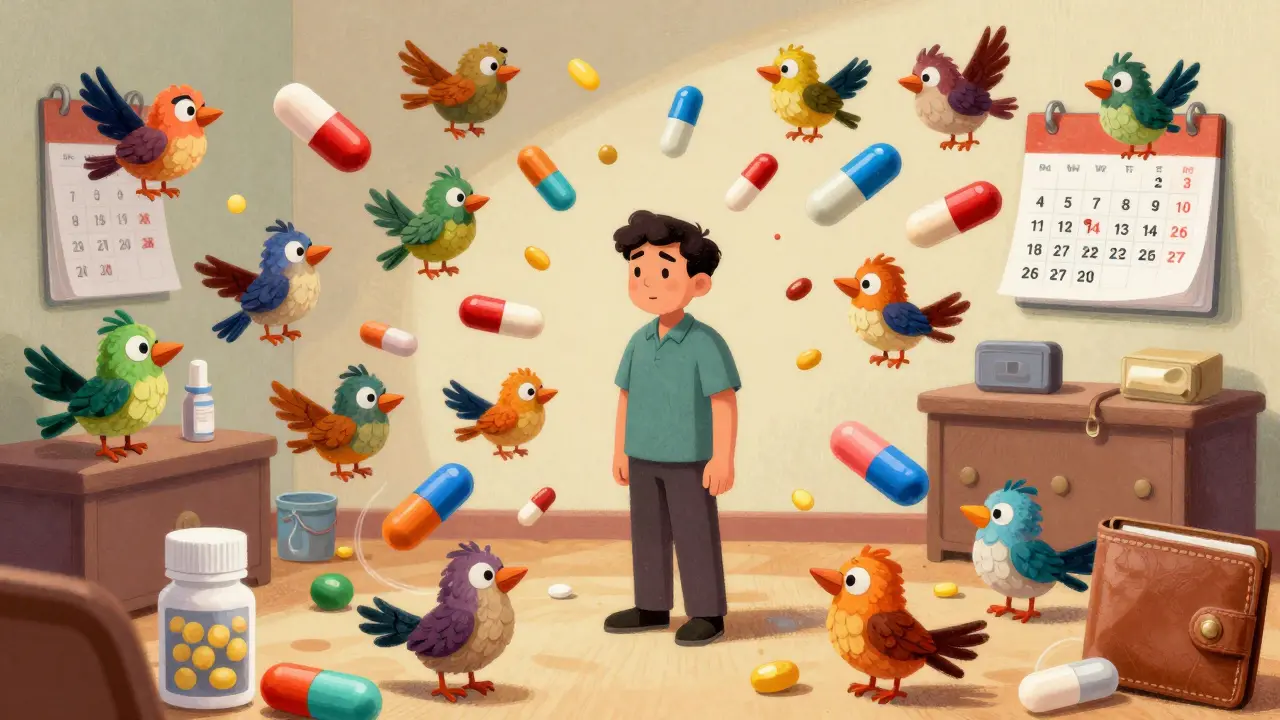
It’s not just about chemistry; it’s also about psychology and logistics. When pharmacies switch generic manufacturers, the pill’s appearance often changes. Color, shape, and scoring vary by manufacturer. A 2023 study tracking medication patterns over five years found that 67% of patients identified their generic medications solely by these physical traits.
This reliance on visual cues leads to errors. The same study documented an 11.5% rate of unrecognized medication duplication. Patients thought they were taking two different drugs because the pills looked different, not realizing both were the same generic medication from different batches or manufacturers. In extreme cases, patients switched between five different generic manufacturers in five years, creating chaos in their medication management.
There is also a financial irony. While generics save money upfront, poor adherence or adverse events can drive costs up. A 2014 study calculated that managing a single breakthrough seizure after a generic substitution averaged $1,850 per incident. These emergency room visits and hospital stays can quickly offset the savings from the cheaper prescription. Furthermore, only 19.7% of patients in the study knew the indication for the medication they were taking, highlighting a critical gap in patient education during switches.
What Should You Do? Practical Steps for Safe Switching
If you are considering switching from a brand-name drug to a generic, or if your pharmacy has already made the switch, here are practical steps to ensure your safety:
- Know your drug class. If you are taking medication for epilepsy, thyroid disorders (like levothyroxine), or certain heart conditions (like warfarin), ask your doctor about the specific risks of switching. These are likely narrow therapeutic index drugs.
- Request consistent manufacturers. If you tolerate a specific generic well, ask your pharmacy to try to stick with that manufacturer. Pharmacists can often order from a specific wholesaler to maintain consistency, though this isn’t always guaranteed.
- Monitor for changes. Keep a log of any new symptoms after a switch. Increased dizziness, return of symptoms (like seizures or pain), or unusual side effects should be reported to your doctor immediately.
- Ask for therapeutic drug monitoring. For NTI drugs, request blood tests to check drug levels shortly after switching. This provides objective data on whether the new formulation is working for your body.
- Don’t assume equivalence. Just because two pills contain the same active ingredient doesn’t mean they behave identically in your system. Excipients (inactive ingredients) can affect absorption rates.
Communication is key. General physicians often discuss switches passively. Make it an active conversation. Tell your doctor, "I want to make sure this generic works for me," rather than assuming it will automatically.
Regulatory Landscape and Future Directions
Regulators are aware of these issues. The FDA’s 2023 draft guidance on complex generics proposes additional bioequivalence studies for certain narrow therapeutic index drugs. The goal is to tighten the standards for medications where small variations matter most.
In Europe, the approach differs. The European Union permits substitution only when explicitly authorized by the prescriber, whereas the U.S. follows an "automatic substitution" model in 49 states. This means in America, unless you specifically opt-out or your doctor marks "Dispense as Written," the pharmacist will substitute the generic. This automatic nature contributes to the confusion seen in patient studies.
Current research is also looking at genetic factors. A 2023 University of Toronto study identified genetic polymorphisms in enzymes like CYP2C9 that may make certain patients more susceptible to concentration variations between brands and generics. This suggests that in the future, personalized medicine could determine who can safely switch and who cannot, moving beyond one-size-fits-all guidelines.
Are generic drugs exactly the same as brand-name drugs?
No, they are not identical. They contain the same active ingredient in the same dosage, but they may differ in inactive ingredients (excipients), color, shape, and taste. Crucially, the FDA allows generic drugs to have a bioequivalence range of 80-125% compared to the brand-name drug, meaning absorption rates can vary slightly.
Is it safe to switch from brand to generic for epilepsy medication?
For many patients, yes, but caution is advised. Antiepileptic drugs often have a narrow therapeutic index. Clinical studies show that some patients experience increased seizure frequency or side effects like mood swings and blurred vision after switching. Monitoring drug levels and consulting with a neurologist is essential before making the switch.
Why do some generics cause side effects while others don't?
Side effects often arise from differences in inactive ingredients or slight variations in how quickly the drug dissolves and absorbs. For drugs with a narrow therapeutic index, even a small change in absorption speed can push drug levels in the blood outside the safe range, leading to toxicity or lack of efficacy.
Can I refuse a generic substitution at the pharmacy?
Yes. In the United States, you can ask your doctor to write "Dispense as Written" or "Brand Medically Necessary" on the prescription. Additionally, in many states, patients have the right to opt-out of automatic generic substitution by informing the pharmacist directly, though insurance coverage may differ.
Do generics save money in the long run?
Generally, yes. Generics account for 90% of prescriptions in the U.S. but only 23% of spending, saving billions annually. However, for narrow therapeutic index drugs, if a switch leads to adverse events or hospitalizations, the immediate cost savings can be offset by higher medical expenses. For most chronic conditions like hypertension, generics improve adherence due to lower costs, leading to better long-term outcomes.