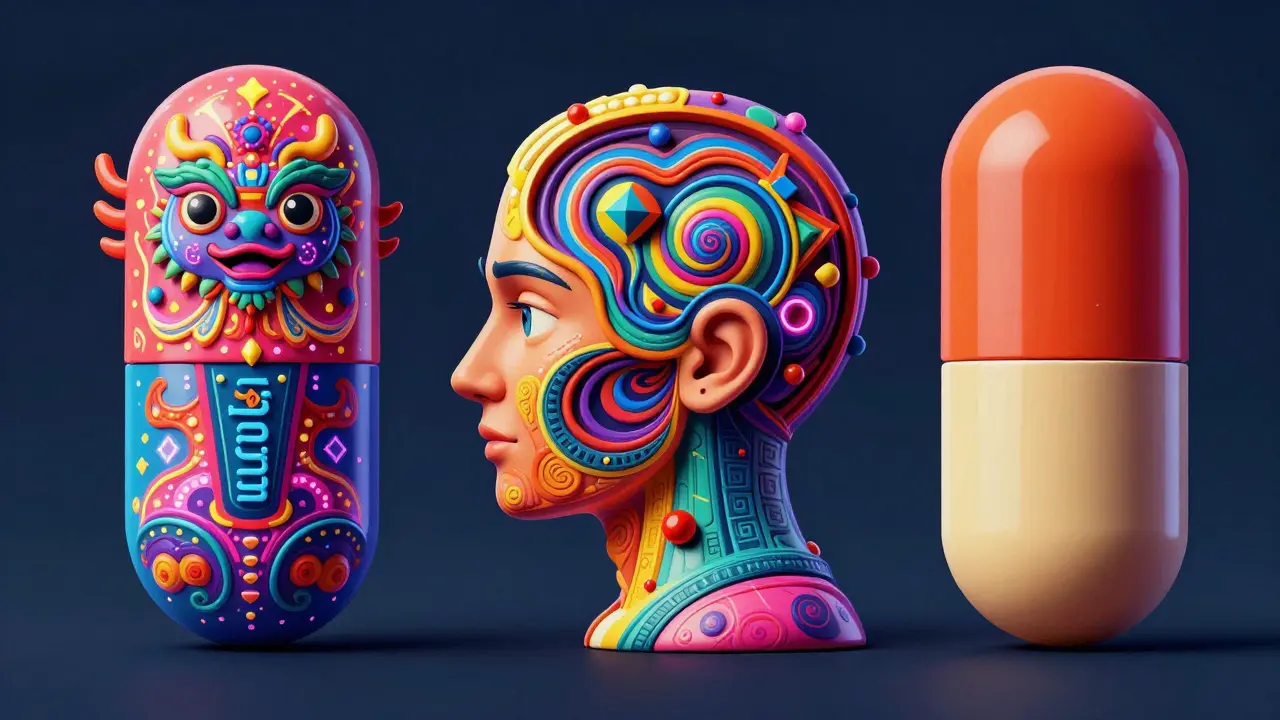
You’ve been taking a brand-name medication for years, and it works perfectly. Then, your pharmacist switches you to a generic version to save you money. Suddenly, you feel like the drug isn't hitting the same, or worse, you start noticing side effects you never had before. Is the medicine actually weaker, or is something else happening in your head? This is the classic clash between clinical reality and brand psychology.
The truth is that for the vast majority of people, the difference is invisible to the body but loud in the mind. While the chemistry remains the same, the experience of taking the pill changes based on what we believe about the label. Understanding this gap is the key to saving thousands of dollars without sacrificing your health.
The Science of "Same"
To understand why generics feel different, we first have to look at what they actually are. A Generic Medication is a pharmaceutical equivalent that contains the same active ingredient, dosage, and strength as a brand-name drug. They aren't "knock-offs" or "lite" versions; they are chemically identical in the ways that matter for your recovery.
The FDA (U.S. Food and Drug Administration) enforces a strict standard called Bioequivalence. This means the generic version must deliver the same amount of active ingredient into your bloodstream within the same timeframe as the original. Specifically, they must fall within a statistical range of 80-125% of the brand-name drug's pharmacokinetic profile. While a 20% window might sound like a lot to a patient, medical experts have established that this variation is clinically insignificant for most treatments.
Think of it like buying a generic brand of salt. Whether it comes in a fancy box with a logo or a plain white bag, the sodium chloride does the exact same thing to your food. The "brand" is the packaging, not the chemistry.
Why Your Brain Tricks You
If the chemicals are the same, why do so many people swear that generics don't work? Enter the Nocebo Effect. You've probably heard of the placebo effect, where believing a sugar pill works actually makes you feel better. The nocebo effect is the dark twin: it's when a negative expectation creates a negative physical outcome.
When a patient is told a drug is "cheaper" or "generic," they may subconsciously associate those words with "lower quality." This mental trigger can cause real physical symptoms. A 2023 study in JAMA Network Open revealed a startling trend: patients told that generics were less effective showed 41% worse adherence and reported more side effects, regardless of the drug's actual performance. Your brain essentially tells your body to reject the medicine because it doesn't trust the brand.
This psychological loop is often reinforced by the price. We are conditioned to believe that "you get what you pay for." When a generic costs 80-85% less than the brand name, our internal logic suggests it must be inferior. In reality, the price drop happens because the generic manufacturer didn't have to spend billions on the initial research, development, and marketing that the original company did.
The "Inactive" Difference
While the active ingredients are identical, generics aren't clones in every single way. They use different Excipients-these are the inactive ingredients like binders, fillers, and dyes that hold the pill together or give it color.
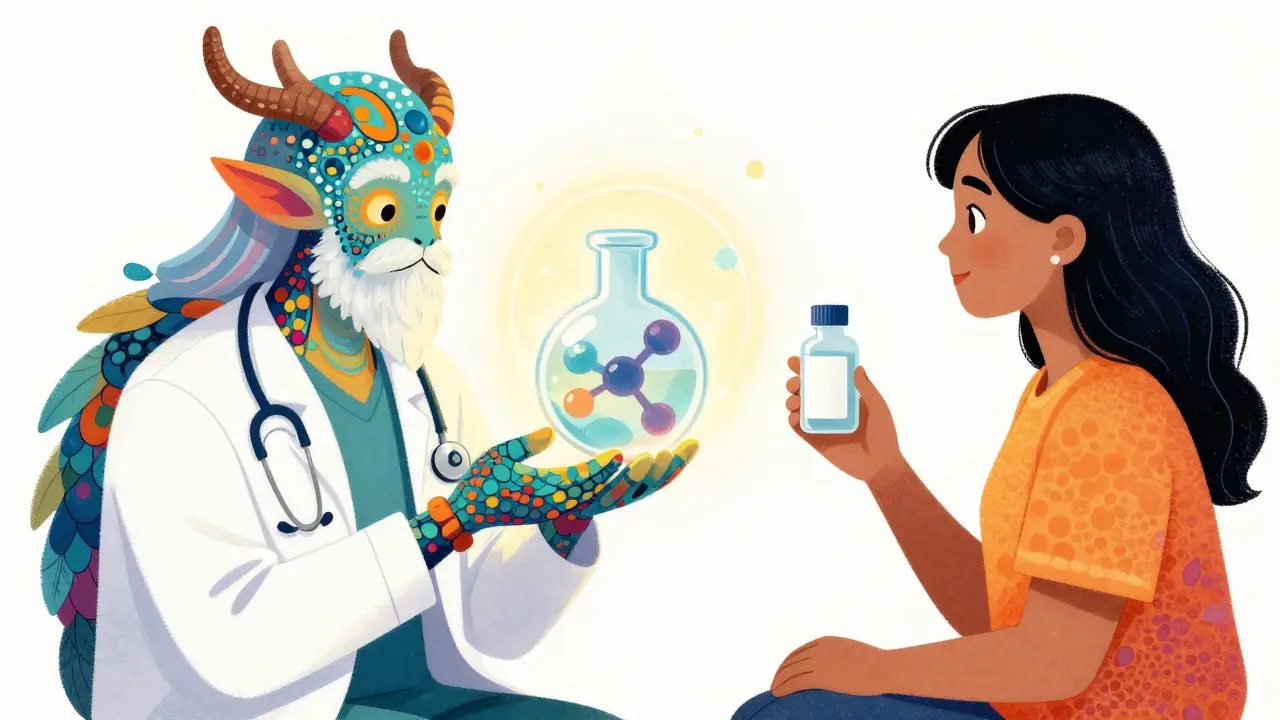
For most people, these fillers do nothing. However, a small percentage of patients might be sensitive to a specific dye or filler used in a generic version. This can lead to a genuine (though rare) allergic reaction or a difference in how the pill dissolves in the stomach. When this happens, it's not that the medication is "less effective," but that the patient's body is reacting to the non-medicinal parts of the pill.
| Feature | Brand-Name Drug | Generic Equivalent |
|---|---|---|
| Active Ingredient | Identical | Identical |
| FDA Approval | Full New Drug Application | Bioequivalence Proof |
| Inactive Ingredients | Specific Binders/Dyes | Different Binders/Dyes |
| Cost | High (includes R&D) | Low (manufacturing only) |
| Efficacy | Standardized | Clinically Equivalent |
The High Cost of Doubt
The gap between perception and reality isn't just a curious psychological quirk; it has serious health consequences. When people distrust their generics, they stop taking them. A study in Research in Social and Administrative Pharmacy found that 22% of patients who perceived generics as inferior discontinued their medication prematurely. Compare that to only 8% of patients who felt neutral about the switch.
This leads to a dangerous cycle. A patient switches to a generic, experiences the nocebo effect (feeling worse), assumes the drug isn't working, and stops taking it. Now they are actually sick-not because of the generic drug, but because they have no medicine in their system at all. This is particularly risky for "narrow therapeutic index" drugs, such as those used for epilepsy or thyroid conditions, where a consistent dose is critical.
Beyond individual health, this distrust costs the healthcare system billions. While generics saved about $1.7 trillion between 2009 and 2019, millions more are still spending extra on brand names simply because they don't trust the equivalent version.
How to Overcome the Perception Gap
If you're struggling with the switch to a generic, the best cure is a combination of data and communication. The most effective way to break the nocebo cycle is to realize that your symptoms might be a response to the idea of the drug rather than the drug itself.
- Ask for the active ingredient: Have your pharmacist show you that the chemical name on the brand-name box is exactly the same as the one on the generic bottle.
- Check FDA documentation: Look for the therapeutic equivalence ratings. Knowing that a government agency has verified the blood-concentration levels can quiet the "what if" voice in your head.
- Track your symptoms objectively: Use a mood or symptom journal. Often, we remember the one "bad day" after a switch and ignore the ten "good days," creating a false narrative that the generic isn't working.
- Talk to your doctor: Research shows that a doctor's endorsement is the strongest predictor of whether a patient will successfully use a generic. If your provider explains why it's the same, your brain is more likely to accept it.
Are generic drugs actually made in lower-quality factories?
No. All manufacturers selling drugs in the U.S., whether brand or generic, must follow the same Current Good Manufacturing Practices (cGMP). While some foreign plants have had more inspection observations in the past, the final product must meet the same FDA safety and potency standards to be sold.
Why does my generic pill look different if it's the same medicine?
The shape, color, and size of a pill are not regulated to be the same as the brand name. This is because the brand-name company owns the patent on the specific "look" of the pill. The generic version uses different dyes and fillers (excipients), but the active chemical that treats your condition is identical.
Can a generic drug have different side effects?
Because the active ingredient is the same, the primary side effects are usually identical. However, because the fillers (inactive ingredients) differ, a very small number of people may have an allergic reaction to a filler in a generic that wasn't in the brand name, or vice versa.
Is it ever safer to stay on a brand-name drug?
For the vast majority of medications, there is no clinical difference. However, for a tiny fraction of "narrow therapeutic index" drugs, some doctors prefer a consistent brand to avoid even the smallest 20% fluctuation in absorption. Always consult your physician before making a change with high-risk medications.
Why are generics so much cheaper if they are just as good?
The original company spends millions on clinical trials, FDA approval processes, and massive advertising campaigns. Once the patent expires, generic companies don't have to repeat those expensive trials or pay for the marketing. They only pay for the manufacturing and distribution, and they pass those savings to the consumer.
Sure the chemicals are the same but who is actually checking the factories in other countries. The FDA just rubber stamps this stuff while big pharma laughs all the way to the bank because they know we're just guinea pigs for these cheap alternatives.
Total corporate propaganda. They just want us to accept lower standards for profit.
It is important to recognize that while the active ingredients are identical, individual biochemistry varies. Some patients may genuinely experience different absorption rates due to the excipients mentioned in the article. If you feel a difference, please maintain a detailed log and present it to your prescribing physician to determine if a brand-specific prescription is medically necessary in your particular case.
the idea that the mind controls the body is just a way to gaslight peple into taking cheap pills
who decided that 20% is insignifcant maybe for some but in the grand scheme of existance the margin is where the truth hides and the fda is just a bureaucracy designed to keep us compliant with the state
Great breakdown! I've seen so many people stress over this. Just remember that the science is on your side and switching to generics is a fantastic way to keep your healthcare costs down while getting the exact same result. Keep pushing for that efficiency in your health routine!
As a healthcare professional, I can confirm that the vast majority of my patients do wonderfully on generics. However, I always emphasize the importance of consistency. If your insurance company switches your generic manufacturer every few months, that can actually cause instability in your levels. It is not the generic itself that is the problem, but the fluctuation between different generic manufacturers. Always check the NDC number on your bottle to ensure you are getting the same version each time.
Keep your heads up everyone! Just take a deep breath and trust the process. You've got this!
The irony here is that the author assumes the reader is naive enough to believe the 80-125% range is a coincidence. It's a systemic failure of precision that we call 'equivalence' simply because the alternative is too expensive for the state. It's a shallow analysis of a deep industrial problem.
listen generic drugs save lives in developing nations where brand names are impossible to afford stop complaining about a 20 percent window when some people have zero percent access to meds
Thanks for sharing this! 💊✨
I had a hard time switching at first but it really does get better once you stop worrying about it. Just be patient with yourself and your body.
I totally get where people are coming from with the side effects thing. It's scary when you feel something new in your body and you don't know why. It's good to know that the fillers might be the culprit rather than the actual medicine.