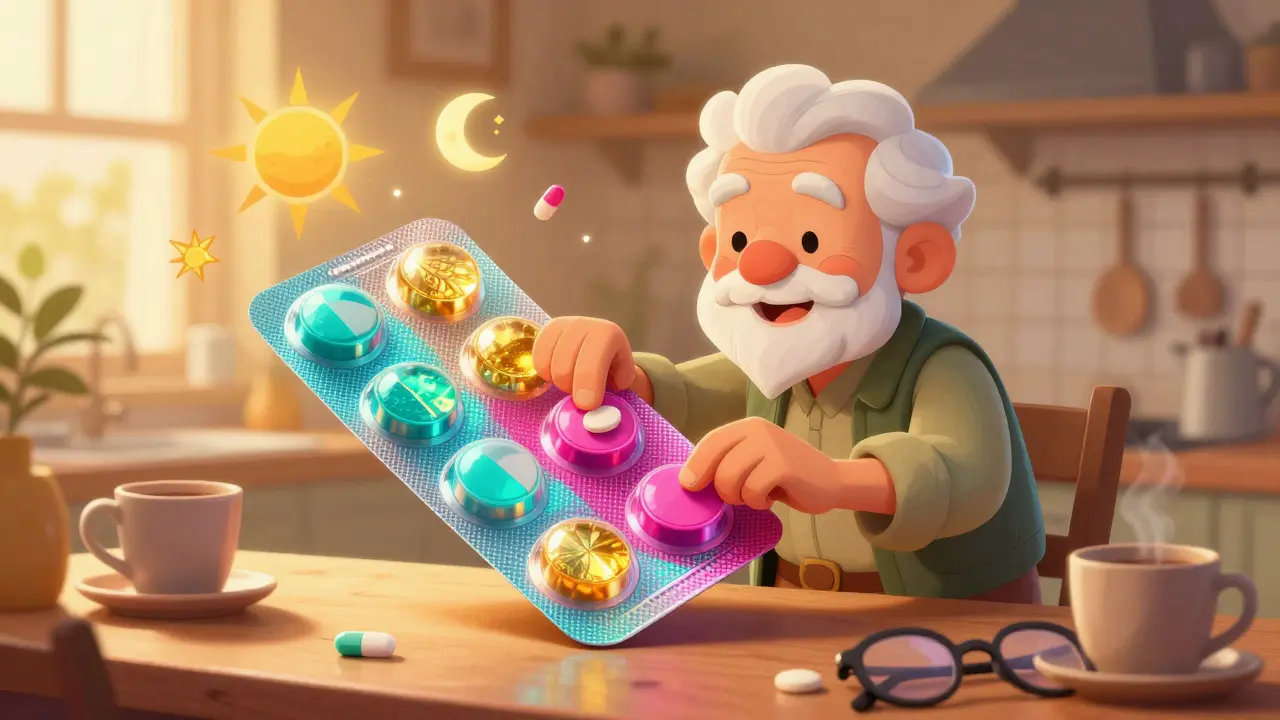
For many seniors, taking multiple medications every day is more than just a routine-it’s a daily challenge that can lead to missed doses, confusion, and even hospital visits. About half of older adults don’t take their meds as prescribed, and that’s not because they’re forgetful or careless. It’s because traditional pill bottles are hard to open, labels are too small, and keeping track of morning, afternoon, and bedtime pills becomes overwhelming. That’s where pill packs and blister packaging come in. These aren’t fancy gadgets or expensive tech-they’re simple, proven tools designed by pharmacists to make medication safety easier for seniors.
What Are Blister Packs and Pill Packs?
Blister packs and pill packs are both pre-sorted medication systems made by pharmacies. They group each dose into its own compartment, labeled clearly by day and time-morning, noon, evening, bedtime. Think of them like a calendar for your pills.
Blister packs are rigid plastic trays sealed with foil. Each compartment is a small square you press through to pop the pill out. The whole week is usually in one unit-about 6 inches by 4 inches. Once you’ve pressed a compartment, you can see right away if you’ve taken that dose. No guessing. No double-dosing.
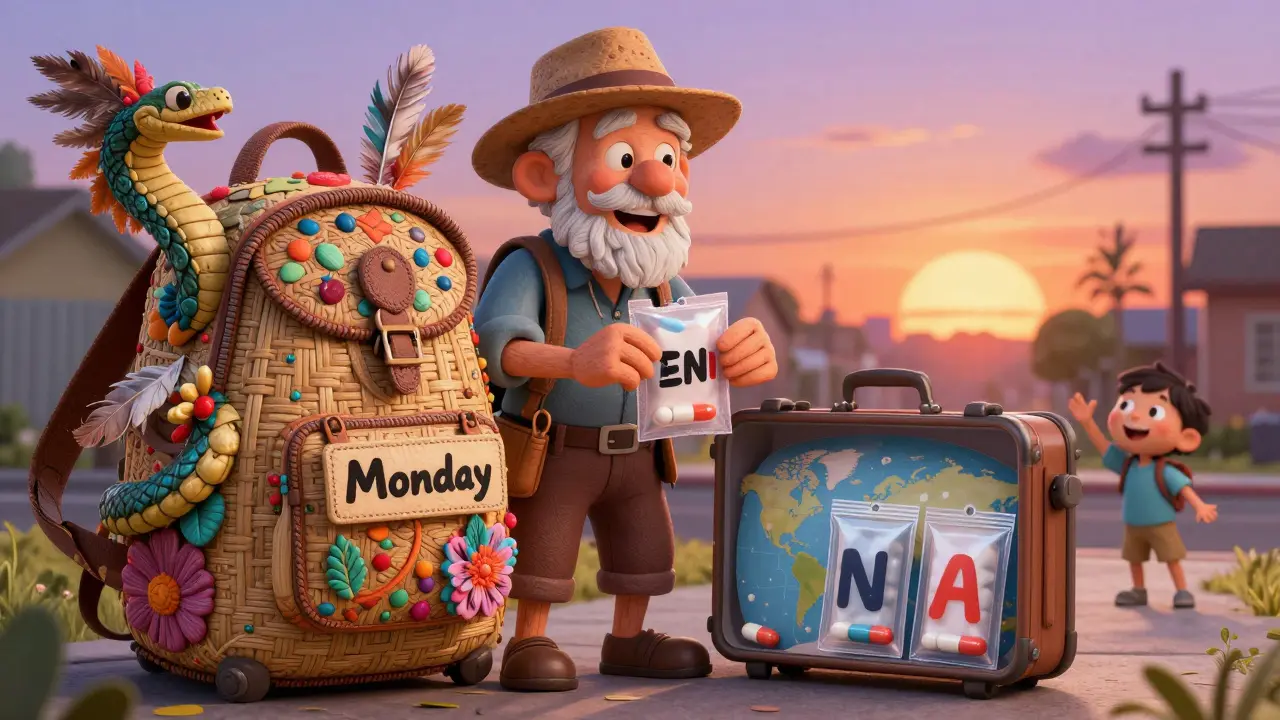
Pill packs, sometimes called multi-dose pouches, are similar but made of flexible plastic. Each day’s pills are in a separate pouch you can tear off. This makes them perfect for travel. Need to go to your grandkid’s soccer game? Just grab Monday’s pouch and go.
Both are created by pharmacists who review your full list of medications. They check for dangerous interactions, make sure doses are correct, and even label everything in large, high-contrast text for seniors with vision issues. This step alone reduces medication errors by up to 37% for people on five or more pills a day.
Why These Systems Work Better Than Pill Bottles
Traditional pill bottles are a nightmare for many seniors. The caps are hard to twist-especially if you have arthritis, which affects nearly half of people over 65. The labels are tiny. And if you forget whether you took your pill, you can’t tell just by looking at the bottle. You might shake it. You might count. You might end up taking two by accident.
Blister packs fix all of that.
- Visual confirmation: If the foil is pushed in, you’ve taken it. If it’s still flat, you haven’t.
- No spills: Pills stay sealed until you’re ready to take them. No more pills rolling across the kitchen floor.
- Tamper-proof: Unlike pill bottles that can be opened and closed without a trace, blister packs show if someone else has tampered with them.
- Reduces errors: Studies show blister packaging cuts home-based medication mistakes by about 50%.
One study followed seniors using smart blister packs for eight weeks. Participants averaged 78 years old. Most said the system was easy to use and gave them confidence. One woman, who used to call her daughter three times a day to check if she’d taken her meds, stopped calling altogether. The visual system gave her peace of mind.
Blister Packs vs. Pill Packs: Which One Is Right?
Not all seniors need the same thing. Your lifestyle matters.
| Feature | Blister Packs | Pill Packs |
|---|---|---|
| Structure | One rigid plastic tray with foil seals | Connected flexible pouches |
| Travel-Friendly | No-you must carry the whole week | Yes-tear off one day at a time |
| Modification | Hard-change requires new pack | Easier-swap out a single pouch |
| Best For | Seniors at home with stable routines | Seniors who travel or have changing meds |
| Hand Strength Needed | Medium-pressing foil can be tough | Low-pouches tear easily |
If you’re mostly at home and take the same meds every day, a blister pack gives you the clearest visual record. If you visit family every weekend or go on short trips, pill packs are more practical. Some pharmacies even offer hybrid systems-weekly blister packs with detachable daily pouches for travel.
Who Benefits the Most?
These systems aren’t for everyone-but they’re a game-changer for certain groups:
- Seniors taking five or more medications daily (39% of adults over 65)
- Those with memory issues, like early dementia or mild cognitive decline
- People with arthritis or weak grip strength
- Seniors living alone with no one to remind them
- Families worried about missed doses or overdoses
One caregiver shared on Reddit that her mom used to mix up her blood pressure pills and diabetes meds. After switching to blister packs, the confusion stopped. Her mom started taking her meds without being asked. The caregiver said, “It’s like she got her independence back.”
For seniors with severe arthritis, opening blister packs can still be a challenge. Some find the foil too stiff. In those cases, pill packs with easy-tear pouches are better. Pharmacies can also provide blister packs with perforated edges or special tools to help push pills through.
How to Get Started
Getting a blister or pill pack isn’t something you buy online. You need a pharmacy that offers the service.
- Ask your pharmacist if they offer medication packaging. Most chain pharmacies (like CVS, Walgreens) and many independent ones do.
- Bring your full list of medications-including over-the-counter pills, vitamins, and supplements.
- The pharmacist will review everything for interactions and correct dosing.
- You’ll choose between weekly blister packs or daily pill pouches.
- They’ll label everything in large print and show you how to use it.
Most U.S. pharmacies don’t charge extra-they bundle the cost into your regular prescription fee. In Canada, some charge around $5 per week. Medicare Part D plans are increasingly covering this as part of medication therapy management, especially for chronic conditions like heart disease or diabetes.
Important: You need to plan ahead. It takes 3 to 5 business days to prepare a new pack. If your doctor changes your meds mid-week, you’ll have to wait for a new pack. That’s the biggest downside. For unpredictable changes, pill packs are more flexible.

What to Watch Out For
Even the best systems have limits.
- Don’t try to refill them yourself. Only pharmacists should sort your meds. Mixing pills at home defeats the purpose.
- Store packs in a cool, dry place. Heat and moisture can damage pills.
- Check expiration dates. Some pills don’t last long once removed from original bottles.
- If you’re traveling internationally, carry a copy of your medication list. Customs may ask.
- Some rural pharmacies don’t offer this service-only 62% in rural areas versus 89% in cities.
And while these systems reduce medication errors, they’re not foolproof. If you notice a pill looks different, or the label doesn’t match what your doctor told you, call the pharmacy right away.
What’s Next? Smart Packaging Is Coming
The next wave of medication packaging isn’t just physical-it’s digital. New blister packs now have tiny sensors embedded that track when a compartment is opened. If a dose is missed, the system sends a text to a family member or caregiver. Some even connect to apps that remind users via voice or phone call.
One study found that seniors using these smart packs had better adherence and fewer hospital visits. Experts predict that by 2028, nearly half of all senior medication packaging will include some kind of digital monitoring.
But for now, the simple, low-tech version still works best for most people. You don’t need a smartphone to take your pills. You just need clarity, consistency, and confidence.
Real Impact: Less Stress, Better Health
Medication non-adherence causes 125,000 preventable deaths in the U.S. every year. It also leads to 10% of all hospitalizations among seniors. That’s not just a statistic-it’s someone’s parent, grandparent, or neighbor.
Blister and pill packs don’t just make life easier. They save lives. Families report a 42% drop in medication-related stress after switching. Seniors feel more in control. They sleep better. They stop calling their kids every hour to ask if they took their pills.
This isn’t about convenience. It’s about dignity. It’s about letting older adults live independently, safely, and without constant fear of making a mistake.
If you or someone you care for is struggling with meds, talk to your pharmacist today. Ask about blister packs or pill pouches. It’s one of the simplest, most effective changes you can make.
Are blister packs covered by Medicare?
Medicare Part D plans don’t always cover blister packaging outright, but many do as part of Medication Therapy Management (MTM) services-especially for seniors with multiple chronic conditions. Check with your plan or ask your pharmacist to verify coverage. Some plans waive the fee entirely if you’re on five or more medications.
Can I make my own pill pack at home?
It’s not recommended. Pharmacists check for drug interactions, correct dosages, and expiration dates. Mixing pills yourself increases the risk of errors, especially with similar-looking pills. Even if you use a plastic organizer, you’re still missing the safety check that comes with pharmacy-prepared packaging.
What if I need to change a medication mid-week?
Blister packs can’t be easily adjusted once made. If your doctor changes your dose or adds a new pill, you’ll need to wait for a new pack-which takes 3 to 5 business days. For frequent changes, pill packs (with separate daily pouches) are better. Some pharmacies offer emergency refill services for urgent changes.
Do these packs work for seniors with dementia?
Yes, and they’re often essential. The visual layout helps people with memory loss know what to take and when. Many caregivers report that blister packs reduce confusion and anxiety. Some pharmacies even offer color-coded packs-like red for morning, blue for night-to make it even clearer.
How long do blister packs last?
Blister packs are typically prepared for one week at a time. Some pharmacies offer two-week packs for stable regimens, but weekly is standard. Pills inside are protected from air and moisture, but they still expire based on their original shelf life. Always check the expiration date on the pack and follow your pharmacist’s advice.
If you’re helping a senior manage their meds, start with a conversation at the pharmacy. Ask about blister packs or pill pouches. The process is simple, the benefits are proven, and the impact-on safety, independence, and peace of mind-is real.

This made me cry. My grandma used to mix up her pills and then blame herself. After we got her blister packs, she started smiling again. She even told me, 'I feel like I’m in charge now.' No more panic calls at 2 a.m. Just peace.
Pharmacists are unsung heroes. Don’t sleep on this.
Simple, effective, and backed by data. Why is this not standard everywhere?
Actually, you’re missing the bigger picture. Blister packs are only effective if the senior has cognitive clarity. If they have early dementia, even visual cues fail without caregiver oversight. And let’s not forget - these systems assume the patient has consistent access to a pharmacy that offers this service. In rural America? Good luck. Only 62% of rural pharmacies offer it. That’s systemic neglect disguised as a ‘solution.’
Also, some pills degrade faster in blister packs. I’ve seen warfarin lose potency in heat. Always check with your pharmacist about stability. Most don’t tell you that.
It’s appalling that this is even a topic of discussion. Taking medication correctly is not a luxury. It’s a basic responsibility. If your loved one can’t manage a pill pack, perhaps they shouldn’t be living alone. This isn’t about convenience - it’s about accountability. The healthcare system has coddled people for too long. Blister packs are a Band-Aid on a broken system.
OMG I’M CRYING 😭 THIS IS THE MOST BEAUTIFUL THING I’VE READ ALL YEAR 🥹💖 My aunt went from ‘I’m fine’ to ‘I’m alive’ after blister packs. She started gardening again. She called me back. I’m getting my dad one next week. 💪💊 #MedicationMatters #PharmaciesAreMagic
Y’all are overthinking this. I got my mom a pill organizer from Walmart for $8. She uses it fine. Why pay extra? The pharmacy thing is just upselling. Just label the bottles with a Sharpie and call it a day. No need to make it a whole thing.
Oh, so now we’re romanticizing pharmacy packaging like it’s some kind of moral victory? Let’s be real - this is just a stopgap because we’ve abandoned elder care. We don’t fund home nurses. We don’t fix Medicare coverage. We just hand out plastic trays and call it compassion. It’s performative caregiving. And don’t even get me started on the ‘smart’ blister packs - now we’re surveilling grandma’s pill intake? Next thing you know, they’ll track her bathroom visits too.
The fundamental issue here is epistemic fragility. The biomedical model has been commodified into logistical solutions - pill packs as algorithmic compliance tools. This is not healthcare; it’s behavioral conditioning disguised as autonomy. The real intervention would be a universal caregiver stipend, not a foil tray. The system is not broken - it’s designed to extract value from vulnerability.
Look, I get it - grandma needs help. But why are we letting Big Pharma push this? I work at a pharmacy. They push these packs because they make more money. You think they care about dignity? Nah. They care about the 15% markup. And don’t get me started on how they charge extra for color-coded packs. This is a racket disguised as a kindness.
Thank you for this thoughtful, well-researched post. I appreciate the nuance between blister and pill packs. My mother is on eight medications, and we switched to daily pouches last month. The difference in her anxiety levels has been remarkable. I’ve shared this with our local senior center - they’re now partnering with CVS to offer it monthly. Small steps matter.
But what if the real problem isn’t the packaging - it’s the fact that seniors are prescribed too many drugs in the first place? Polypharmacy is the real killer. We’re treating symptoms with more pills instead of addressing root causes: poor diet, isolation, lack of movement. A pill pack won’t fix a life lived in a chair. You’re fixing the symptom, not the disease.
I used to work in a nursing home. Saw a woman take her husband’s blood pressure pill by accident. He died two weeks later. We never found out why. No one was watching. No one was checking. This system? It’s not just helpful. It’s the only thing standing between a quiet death and a quiet life.