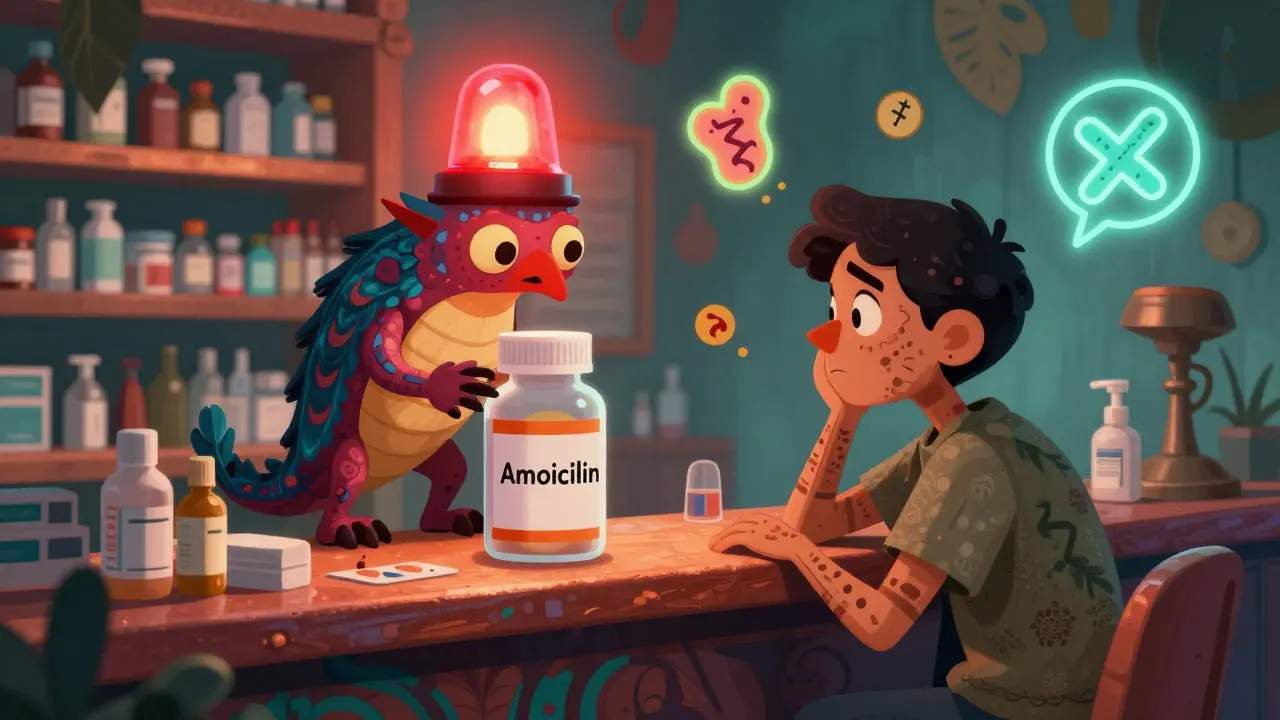
When you pick up a prescription at the pharmacy, you might see a red or yellow pop-up on the screen. It says something like: "Allergy to Penicillin - Avoid Amoxicillin". You assume it’s a safety check. But what if that alert is wrong? What if you’ve taken amoxicillin three times before with no problem? And what if the pharmacist just clicks "Proceed" because they’ve seen this alert 20 times today?
Pharmacy allergy alerts are meant to save lives. But too often, they’re just noise.
What Exactly Is a Pharmacy Allergy Alert?
An allergy alert is a warning generated by your pharmacy’s computer system when a prescribed or dispensed medication might conflict with a documented allergy in your electronic health record. These systems scan your profile - not just for the word "allergy," but for specific reactions like rash, swelling, trouble breathing, or even nausea - and compare them to the chemical structure of the new drug.
They don’t just look at penicillin vs. penicillin. They look at whether amoxicillin (a type of penicillin) could trigger the same reaction. Or whether a cephalosporin like cefdinir might cross-react. Or whether an NSAID like ibuprofen could be risky if you once had hives after taking aspirin.
These alerts come from big databases like First DataBank, which map out how drugs relate to each other chemically. But here’s the catch: most of these systems don’t know the difference between a true allergy and a side effect.
Definite Allergy vs. Possible Allergy: The Two Types You Need to Know
Not all alerts are created equal. There are two main kinds:
- Definite allergy alerts - These pop up when the new drug is in the same class as something you’ve clearly documented as causing a reaction. For example: you wrote "penicillin allergy - anaphylaxis," and the system sees amoxicillin. That’s a direct match. This kind of alert is usually accurate.
- Possible allergy alerts - These are the ones that cause the most confusion. They’re triggered by cross-reactivity assumptions. Like when you had a rash after taking ibuprofen, and now the system warns you about naproxen. But here’s the truth: only about 12% of these NSAID alerts actually mean anything clinically. Most people who say they’re allergic to one NSAID can safely take another.
A 2020 study found that 90% of all allergy alerts are possible, not definite. That means nearly all the warnings you see are guesses - not facts.
What the Alert Doesn’t Tell You (But Should)
When you see an alert, it should show three things:
- The reaction you reported - Was it a rash? Swelling? Vomiting? Nausea?
- The severity - Mild, moderate, severe, or life-threatening?
- Why the system thinks there’s a risk - Is it because you took penicillin? Or because you once felt sick after a shot?
But here’s the problem: 47% of EHR systems don’t record reaction details properly. So if you wrote "allergy to penicillin" without saying what happened, the system assumes the worst - and flags every penicillin-related drug, even if you’ve taken them before.
At one hospital in Minnesota, a patient got 17 allergy alerts for vancomycin because his old record said he had a "penicillin allergy" - which turned out to be a stomachache at age 8. He’d taken penicillin six times since then with no issue. The system didn’t know that. It just saw the word "allergy."

Why Do Pharmacists and Doctors Keep Ignoring These Alerts?
Because they’re wrong - almost all the time.
A 2021 study found that over 95% of allergy alerts get overridden. That sounds scary. But here’s the real story: it’s not because providers are careless. It’s because they’ve learned - the hard way - that most alerts are useless.
At a large hospital in Chicago, nurses reported overriding anaphylaxis alerts 80% of the time. Why? Because the patient had been on the drug for years. Or because the "allergy" was actually a side effect - like diarrhea from amoxicillin - not an immune reaction.
Dr. Kimberly Blumenthal, an allergist at Harvard, put it bluntly: "More than half of these alerts are for drugs patients have already taken without issue."
It’s called "alert fatigue." When you’re bombarded with false alarms, your brain stops listening. And that’s dangerous - because when a real, life-threatening alert finally comes, you might ignore it too.
How to Tell If an Alert Is Real or Just Noise
Here’s how to read an alert like a pro - even if you’re not a doctor:
- Check the reaction - Was it hives, swelling, or trouble breathing? That’s a true allergy. Was it nausea, dizziness, or a headache? That’s a side effect - not an allergy.
- Look at the timing - True allergic reactions usually happen within minutes to two hours after taking the drug. If you had a rash a week later, it’s likely not allergic.
- Ask about cross-reactivity - If you’re told you can’t take cefdinir because of a penicillin allergy, ask: "Is this really a risk?" The actual cross-reactivity rate between penicillin and newer cephalosporins is less than 2%. Most systems still warn you like it’s 50%.
- Check if it’s a class-wide alert - If you’re allergic to one NSAID, does that mean you’re allergic to all of them? No. Ibuprofen and naproxen are different. So are celecoxib and aspirin. Ask for specifics.
At Mayo Clinic, they started requiring pharmacists to document reaction types - not just "allergy." Within six months, accurate documentation jumped from 39% to 76%. And the number of false alerts dropped by nearly half.

What’s Being Done to Fix This?
Systems are slowly getting smarter.
Epic’s 2023 update introduced "Allergy Relevance Scoring" - a machine-learning tool that looks at your history. If you’ve taken amoxicillin five times before, it stops warning you. If you’ve never had a reaction, it lowers the alert level.
Oracle Health (formerly Cerner) now pulls in data from allergist visits. If you had a drug challenge test and proved you’re not allergic to penicillin, the system automatically removes the alert.
The NIH-funded ALERT-ASAP study showed that when clinicians had to pick the reaction type and severity before prescribing, unnecessary alerts dropped by 51% - without missing a single real danger.
By 2026, most major EHR systems will use risk-stratified alerts: true anaphylaxis risks will scream. Mild side effects will whisper. Or not show up at all.
What You Can Do Right Now
You don’t have to wait for the system to fix itself. Here’s what you can do:
- Review your allergy list - At every doctor visit, ask: "What allergies do you have on file?" Make sure it’s accurate.
- Be specific - Don’t just say "allergic to penicillin." Say: "I got hives after taking penicillin in 2018." Or: "I had nausea after amoxicillin - no rash, no breathing issues."
- Ask for a penicillin allergy test - If you think you might have been mislabeled, ask your doctor about a skin test. Up to 90% of people who think they’re allergic to penicillin aren’t. That’s not a myth - it’s science.
- Speak up at the pharmacy - If you see an alert for a drug you’ve taken before, say: "I’ve taken this before with no problem. Can you check my record?"
One woman in Arizona told her pharmacist she was "allergic to ibuprofen" because it gave her a stomachache. She’d been avoiding all NSAIDs for 10 years - until she asked her doctor to test her. Turns out, she wasn’t allergic. She just had a sensitive stomach. She now takes naproxen safely. That’s the power of accurate information.
The Bottom Line
Pharmacy allergy alerts are tools - not rules. They’re designed to help, not scare. But they’re flawed. Most alerts are false. Most reactions aren’t allergies. And most people don’t know how to read them.
Don’t ignore them. But don’t trust them blindly either. Learn to ask the right questions. Update your records. Know the difference between a true allergy and a side effect.
Because the system won’t fix itself - but you can.
What’s the difference between a drug allergy and a side effect?
A drug allergy is an immune system reaction - your body mistakes the drug for a threat and releases chemicals like histamine. That causes symptoms like hives, swelling, trouble breathing, or anaphylaxis. A side effect is a non-immune reaction - like nausea, dizziness, or diarrhea. It’s unpleasant, but not dangerous in the same way. Most people who say they’re "allergic" to a drug actually mean they had a side effect.
Can I outgrow a drug allergy?
Yes, especially with penicillin. Studies show that 80% of people who had a penicillin allergy in childhood lose it within 10 years. Even if you had a severe reaction, your immune system may no longer recognize the drug as a threat. A simple skin test or oral challenge can confirm whether you’re still allergic.
Why do I get alerts for drugs I’ve taken before?
Because your allergy record might be vague. If you wrote "allergy to penicillin" without saying what happened, the system assumes the worst. It doesn’t know you took amoxicillin last year without issues. It only sees the word "allergy" and flags anything in the same class. That’s why detailed documentation matters.
Are cephalosporins safe if I’m allergic to penicillin?
For most people, yes. The risk of cross-reactivity between penicillin and newer cephalosporins (like cefdinir or ceftriaxone) is less than 2%. Older systems warned about all cephalosporins as if the risk was 10%. But modern guidelines say it’s safe for most patients - unless you had a severe IgE-mediated reaction like anaphylaxis. Even then, many can tolerate them under supervision.
Should I avoid all NSAIDs if I had a reaction to one?
No. NSAIDs are not all the same. Ibuprofen, naproxen, aspirin, and celecoxib work differently. If you had stomach upset after ibuprofen, you can likely take naproxen. If you had hives after aspirin, you might be allergic to all COX-1 inhibitors - but not to celecoxib. Don’t assume a class-wide allergy. Ask your doctor to test or review your history.
Next time you see an allergy alert, pause. Don’t just click through. Ask: "What’s the real risk here?" And if you’re unsure - ask your pharmacist or doctor. Your safety isn’t just in the system. It’s in your hands too.
13 Comments
Write a comment