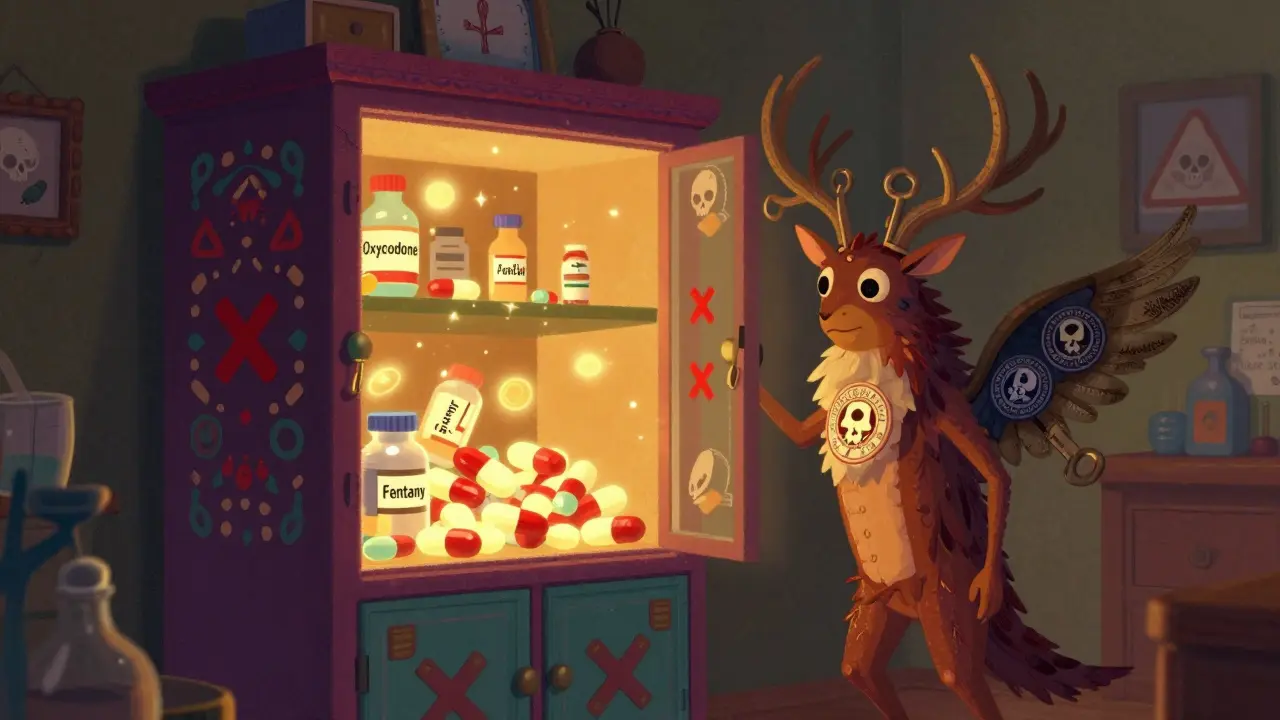
Expired controlled substances aren’t just old pills gathering dust on a shelf-they’re legal liabilities, environmental hazards, and potential weapons for misuse. If you’re a pharmacist, doctor, vet, or even a researcher handling opioids, benzodiazepines, or other Schedule II-V drugs, you can’t just toss them in the trash or flush them down the toilet. The DEA has strict rules, and breaking them can cost you your license, your clinic, or worse-your freedom.
Why You Can’t Just Throw Them Away
Controlled substances are classified by the DEA based on their potential for abuse and addiction. Schedule II drugs like oxycodone, fentanyl, and Adderall have high abuse potential and can lead to severe psychological or physical dependence. Even Schedule IV drugs like Xanax or Ambien can be diverted for illegal use. If these drugs end up in landfills, water systems, or the hands of someone who shouldn’t have them, the consequences are serious.The DEA’s 2014 Final Rule (21 CFR Part 1317) made it clear: expired, damaged, or unwanted controlled substances must be rendered non-retrievable. That means no crushing, dissolving, or mixing with kitty litter-even if those methods work for regular over-the-counter meds. The only accepted method for large quantities is incineration by a DEA-registered reverse distributor. For small amounts, two authorized people must witness the destruction and document it properly.
What’s the Difference Between Inventory Disposal and Wastage?
Not all expired drugs are treated the same. The DEA distinguishes between two types of disposal:- Inventory disposal: Large quantities of unused or expired drugs stored in your facility. These must be transferred to a reverse distributor for incineration. This applies to entire bottles, vials, or stockpiles.
- Wastage: Small amounts left in syringes, vials, or IV bags after administration. These can be destroyed on-site under direct observation by two authorized personnel.
For example, if a hospital pharmacy has 50 unused oxycodone tablets from a closed case, that’s inventory disposal. If a nurse draws up 2 mg of morphine for a patient but only uses 1.5 mg, the leftover 0.5 mg is wastage-and must be witnessed and logged immediately.
How to Dispose of Schedule II Substances
Schedule II drugs are the most tightly controlled. You cannot dispose of them yourself. Here’s the process:- Label all Schedule II substances clearly as “To Be Disposed,” “Expired,” or “Do Not Use.”
- Store them separately in a locked, secure cabinet-never mixed with other medications.
- Complete DEA Form 222 (or use the Electronic Registration System, ERS, since January 2023).
- Contract with a DEA-registered reverse distributor. Companies like Stericycle, Daniels Health, or Drug and Laboratory Disposal, Inc. (DLD) handle this.
- Wait for pickup. Average wait time is 14.7 business days, according to University of Michigan’s 2023 survey.
- Once picked up, the reverse distributor destroys the drugs via incineration and sends you a Certificate of Destruction.
- Keep records for at least two years. This includes the form, delivery receipt, and destruction certificate.
Don’t skip the ERS. Before 2023, paper DEA Form 222 took up to three weeks to process. Now, electronic submission cuts that to under two days. Many clinics still use paper forms out of habit-and pay the price in delays and compliance violations.
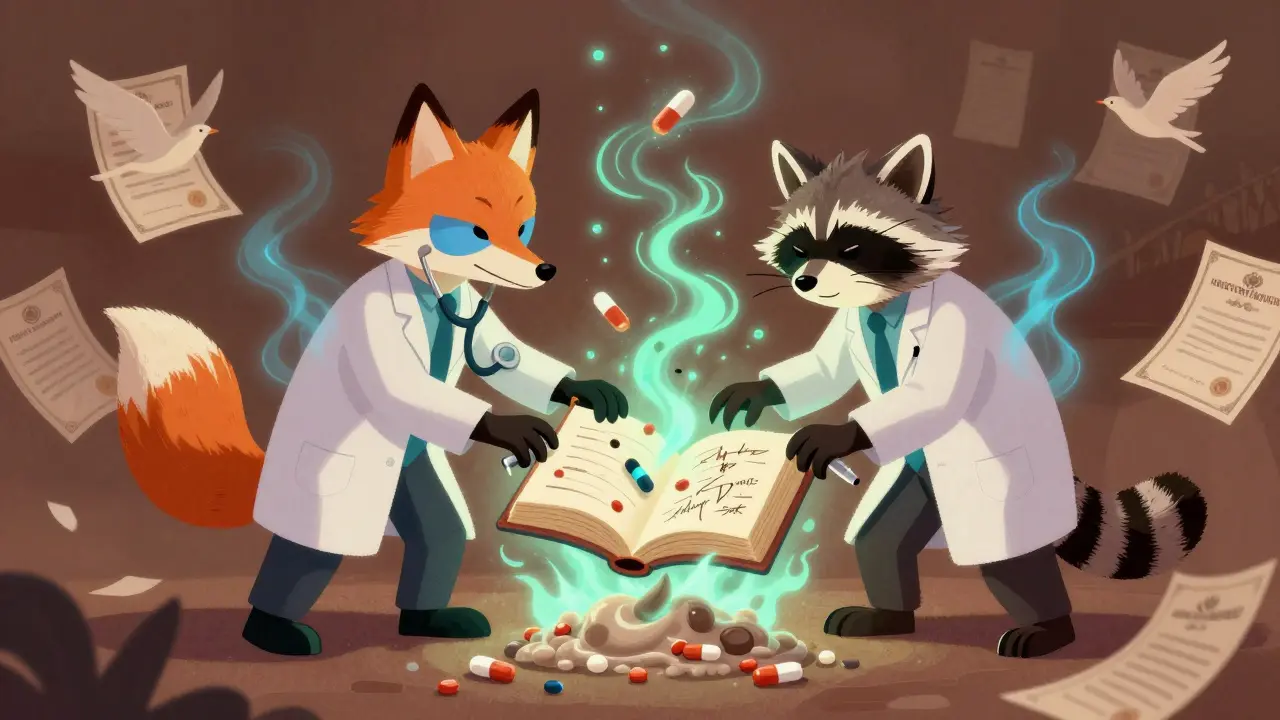
What About Schedule III-V Drugs?
Schedule III-V substances (like hydrocodone/acetaminophen, tramadol, or low-dose benzodiazepines) have slightly more flexibility. You still can’t flush or trash them, but you have more options:- Use a reverse distributor (same as Schedule II)
- Destroy on-site with two authorized witnesses
- Participate in a DEA-authorized take-back event
For on-site destruction, two people must be present: one must be the DEA registrant or their authorized agent. They must:
- Witness the destruction (e.g., pouring liquid into a neutralizing agent or crushing tablets into a non-retrievable slurry)
- Sign and date a logbook entry
- Record the drug name, quantity, date, and method of destruction
Many veterinary clinics use this method for small quantities. But even here, documentation is non-negotiable. A 2022 AAHA survey found that 43.6% of small animal practices were confused about their options-leading to unsafe practices like pouring drugs down the sink or putting them in sharps containers. Both are violations.
Documentation Is Your Shield
The DEA doesn’t just want you to dispose of drugs-they want proof you did it right. Every disposal, big or small, needs a paper trail:- Inventory disposal: DEA Form 222 (electronic), reverse distributor receipt, Certificate of Destruction
- Wastage: Signed logbook entry with names, dates, drug names, quantities, and method
- All records must be kept for at least two years
Failure to document properly led to 327 DEA Warning Letters in 2022 and $2.47 million in fines. One dental office in Ohio lost its DEA registration after an audit found missing disposal logs for 17 bottles of hydrocodone. They didn’t destroy the drugs-they just “forgot” about them.
Training matters too. DEA requires all staff handling controlled substances to complete a 2-hour initial training and a 1-hour annual refresher. Yet, a 2022 audit of 417 dental practices found only 67.3% were compliant. If your staff doesn’t know the rules, you’re at risk.
What Not to Do
Here are the most common-and dangerous-mistakes:- Flushing: The FDA says no for controlled substances, even if you’ve seen “flush lists” online. Some drugs can be flushed if they’re non-controlled, but never opioids or stimulants.
- Mixing with coffee grounds or kitty litter: That works for Tylenol or ibuprofen. Not for oxycodone. The DEA says it doesn’t make the drug non-retrievable.
- Throwing in the trash: Even in a sealed container, someone can dig it out. This is how diversion starts.
- Using blue pads or lab sinks: These are explicitly banned by UCSF and University of Michigan policies.
- Letting one person handle disposal: Two witnesses are mandatory for wastage. No exceptions.

What’s Changing in 2025?
The DEA is rolling out the Electronic Inventory Management System (EIMS) by 2025. This will require real-time reporting of all controlled substance disposals. No more waiting for quarterly audits. Your system will need to auto-report every destroyed dose, every pickup, every log entry.Right now, hospitals using systems like UCSF’s RIO (Research Inventory Online) report 82.4% satisfaction. Paper systems? 18.7% error rate. If you’re still using clipboards and spreadsheets, you’re already behind.
The market for pharmaceutical waste disposal is growing fast-projected to hit $2.8 billion by 2030. That’s because regulators are cracking down. In 2022, the DEA conducted 1,847 inspections. That’s more than five per day, every day.
What If You’re a Small Practice or Vet Clinic?
You’re not alone. Many small clinics struggle with cost and logistics. Reverse distributor pickups can cost $250-$500 per visit. For a vet with only a few expired pills a month, that’s not feasible.Your best bet: participate in a DEA National Take Back Day. These events happen twice a year (next one is April 2026), and you can drop off expired drugs at police stations, pharmacies, or hospitals. No paperwork. No fees. Just bring the drugs in a sealed bag.
Or, use the DEA’s online Disposal Locator Tool (updated November 2022). It finds nearby reverse distributors, take-back sites, or mail-back programs. 76.8% of vets surveyed in 2022 said it helped.
Don’t wait for an audit to find you. If you’re unsure, call your state pharmacy board or DEA regional office. They’ll guide you-no judgment.
Final Thought: It’s Not Just About Compliance
Proper disposal isn’t just about avoiding fines. It’s about protecting your patients, your community, and your conscience. Every expired fentanyl patch left unsecured is one more chance for a teenager to find it in a trashcan. Every undocumented dose is one more step toward a diversion crisis.Take the time to train your team. Keep clean records. Use the right tools. And when in doubt-call a professional. The cost of doing it right is nothing compared to the cost of getting it wrong.
I never realized how much paperwork goes into just getting rid of old pills. I thought mixing them with coffee grounds was enough. Guess I was wrong. Thanks for laying this out so clearly - I’m sharing this with my cousin who runs a small vet clinic in Punjab. They’ve been dumping stuff in the trash out of sheer frustration. This could save them from a nightmare.
While the procedural framework outlined herein is both legally sound and operationally prudent, one must also acknowledge the systemic inefficiencies inherent in the current reverse-distribution model. The 14.7-day turnaround referenced is not merely inconvenient - it is a regulatory liability in environments where controlled substances are stored under continuous security protocols. The delay between identification of non-retrievability and actual destruction constitutes a non-compliant interval under 21 CFR §1317.21(c).
Oh wow. So we can’t flush them, can’t trash them, can’t mix them with kitty litter, but we can pay $500 to some corporate incinerator to burn them? And you want me to believe this isn’t just a profit scheme disguised as public safety? The DEA doesn’t care if you’re a one-man vet clinic - they just want you to pay the toll. Meanwhile, the same people who wrote these rules are probably flushing their own Xanax down the toilet while you’re filling out Form 222.
This is profoundly important. Every pill left unsecured is a potential tragedy waiting to happen. I’ve seen families shattered by diverted prescriptions. The documentation isn’t bureaucracy - it’s a lifeline. Thank you for emphasizing training. Too many staff members are left to guess. Compassion requires structure. Structure requires accountability.
wait so if i have like 3 expired oxy tabs from 2021 can i just throw them in the compost?? i mean its organic right?? also i think the government is lying about the kitty litter thing because my uncle says he did it and nothing happened??
India has no infrastructure for this. Pharmacies here just throw expired narcotics in the river. No forms. No witnesses. No audits. You think this applies to us? The DEA rules are for rich countries. We deal with real life. People die from lack of medicine - not from expired pills.
Did you know the reverse distributors are owned by the same corporations that manufacture these drugs? The whole system is rigged. The DEA doesn’t want you to destroy the pills - they want you to pay them to destroy them. The EIMS rollout? It’s not about compliance. It’s about tracking every dose you ever handled. They’re building a national drug database. And yes - they’re watching you right now.
Let me tell you something - this isn’t about pills. This is about control. The DEA doesn’t care if you’re a nurse or a vet. They care that you’re not a citizen with power. You’re supposed to be scared of your own medicine cabinet. That’s why they made it so complicated. That’s why they need your signatures, your logs, your timestamps. They don’t trust you. And they don’t want you to trust yourself. This is psychological warfare disguised as regulation. The real crisis isn’t diversion - it’s the erosion of autonomy. We’re being trained to obey, not to think. And when they take away your right to dispose of your own meds - what’s next? Your right to breathe?