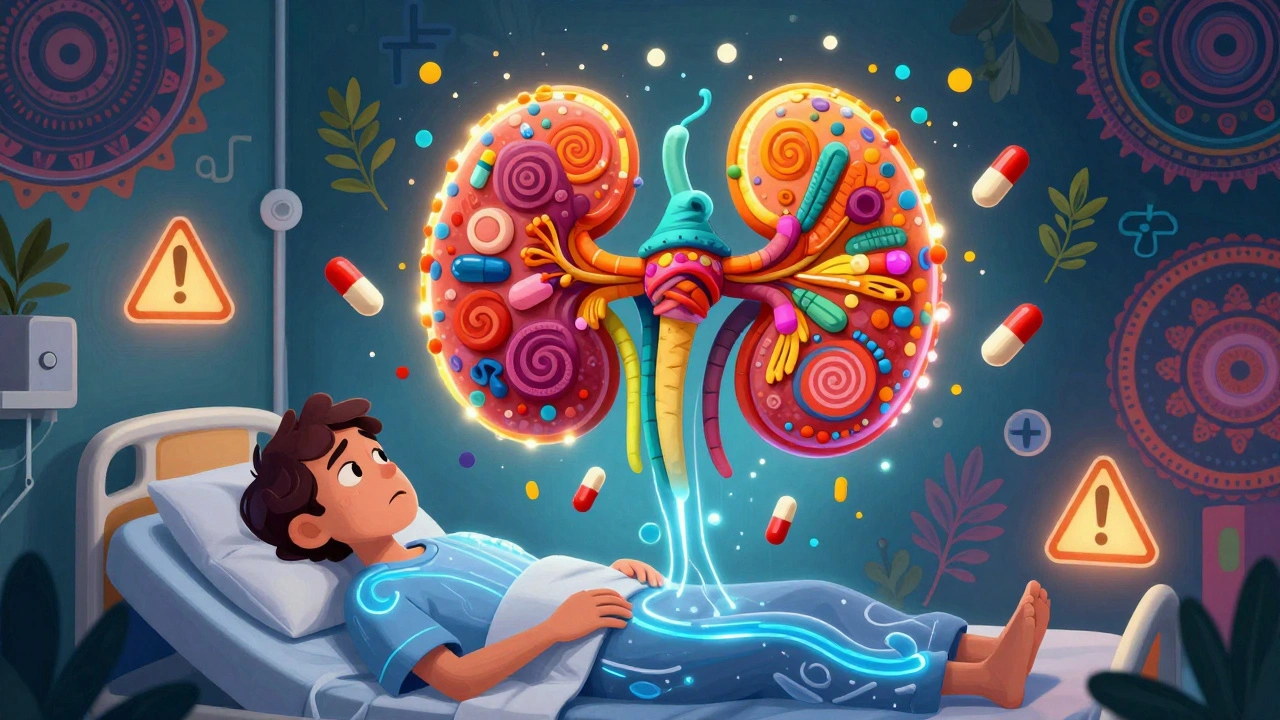
Drug-Induced Kidney Injury Risk Assessment
How much do you know about your kidney risk?
This tool helps you understand your personal risk of drug-induced kidney injury based on the factors discussed in the article.
Every year, drug-induced kidney failure sends tens of thousands of people to the hospital-not because of an accident, infection, or chronic illness, but because of a medication they were told was safe. This isn’t rare. In fact, up to 60% of acute kidney injuries in intensive care units are caused by drugs. And the worst part? Most of these cases are preventable.
What Exactly Is Drug-Induced Kidney Failure?
Drug-induced kidney failure, more accurately called drug-induced acute kidney injury (DI-AKI), happens when a medication damages your kidneys suddenly-sometimes within hours, sometimes after days. It’s not the same as slow, long-term kidney disease. This is a sharp drop in kidney function, often signaled by rising creatinine levels and less urine output.
The kidneys filter waste, balance fluids, and regulate blood pressure. When drugs interfere with these tasks, the damage can be severe. Three main mechanisms cause this:
- Acute interstitial nephritis: An allergic-like reaction to drugs like proton pump inhibitors (PPIs), antibiotics (penicillin, vancomycin), or NSAIDs. Symptoms include fever, rash, and swollen lymph nodes-often appearing 7 to 14 days after starting the drug.
- Acute tubular necrosis: Direct poisoning of kidney tubules by drugs like aminoglycosides, contrast dyes, or high doses of vancomycin.
- Crystal-induced nephropathy: Certain drugs form crystals in the urine that block kidney tubules. Acyclovir, sulfadiazine, and some HIV meds are common culprits. This can happen within hours.
The Kidney Disease: Improving Global Outcomes (KDIGO) guidelines define AKI as a rise in serum creatinine by 0.3 mg/dL or more within 48 hours, or a 50% increase from baseline. Urine output dropping below 0.5 mL per kg per hour for six hours also counts.
Who’s at Risk?
You don’t have to be old or sick to get DI-AKI-but certain factors make it far more likely:
- Pre-existing kidney disease: If your eGFR is below 60 mL/min/1.73m², your kidneys are already working harder. Adding a nephrotoxic drug pushes them over the edge.
- Age over 65: Kidney function naturally declines with age. Older adults are 3 to 5 times more likely to develop DI-AKI than younger people.
- Dehydration: Low blood volume makes kidneys more vulnerable to drug damage. This is why people on diuretics or with diarrhea are at higher risk.
- Polypharmacy: Taking five or more medications at once increases your risk by nearly 4 times. The more drugs you take, the higher the chance of harmful interactions.
- Diabetes or heart failure: These conditions reduce blood flow to the kidneys, making them less able to handle toxic stress.
One patient story from the American Kidney Fund tells the tale: JohnD_72, 72, took ibuprofen daily for 10 days after dental surgery. He had stage 3 chronic kidney disease (eGFR 40). His creatinine jumped from 1.8 to 4.2 in three days. His doctor didn’t connect the dots for five days. He ended up hospitalized for a week.
The Top Culprits: Drugs That Hurt Your Kidneys
Not all drugs are equal when it comes to kidney risk. Some are far more dangerous than others. Here are the most common offenders, backed by data from the FDA’s FAERS database and clinical studies:
| Drug Class | Examples | Typical Risk | Key Prevention Tip |
|---|---|---|---|
| NSAIDs | Ibuprofen, naproxen, diclofenac | 1.8 cases per 1,000 patient-years | Avoid entirely if eGFR <60 |
| Antibiotics | Vancomycin, piperacillin-tazobactam | 2.7 and 2.1 cases per 1,000 patient-years | Monitor levels; avoid prolonged use |
| Contrast Dyes | Iodinated agents for CT scans | 10% of hospital-acquired AKI | Hydrate with saline before and after |
| Proton Pump Inhibitors (PPIs) | Omeprazole, pantoprazole | Common cause of interstitial nephritis | Use lowest dose for shortest time |
| Sulfonamides | Sulfamethoxazole, sulfadiazine | Crystal formation if urine pH <7.1 | Keep urine alkaline and hydrated |
| Antivirals | Tenofovir, acyclovir | Crystal-induced injury; high risk in dehydration | Hydrate well; avoid in advanced CKD |
NSAIDs alone cause 3-5% of all AKI cases annually. In elderly patients with existing kidney issues, that risk jumps to 15-20%. And yet, many people still take them daily for back pain or arthritis without realizing the danger.

How to Recognize It Early
DI-AKI often flies under the radar. It doesn’t always cause pain or obvious symptoms. That’s why it’s so dangerous.
Here’s what to watch for:
- A sudden drop in urine output-especially if you’re drinking normally.
- Swelling in legs, ankles, or face.
- Unexplained fatigue, nausea, or confusion.
- Fever and rash (signs of interstitial nephritis).
- A recent change in medication, especially NSAIDs, antibiotics, or contrast dye.
But the most reliable sign? A blood test showing rising creatinine. If your creatinine jumps by 0.3 mg/dL or more within 48 hours after starting a new drug, DI-AKI is likely.
One study found that 38% of AKI cases happened because doctors kept giving nephrotoxic drugs even after kidney function dropped. That’s not negligence-it’s lack of awareness. If your doctor doesn’t check your kidney function before or during treatment with high-risk drugs, ask why.
Prevention: The 3 Rs Framework
Here’s the good news: 60-70% of DI-AKI cases are preventable. The NHS Kidney Care team developed the “Three Rs” strategy-and it works.
- Reduce Risk - Before starting any new medication, ask: Is this really necessary? Can I use something safer? For example, switch from naproxen to acetaminophen for pain. For heart patients, statins like atorvastatin 80mg taken 24 hours before a CT scan can reduce contrast-induced injury by 34%.
- Recognize Early - Always get a baseline creatinine and eGFR before starting high-risk drugs. If you’re over 65, have diabetes, or take multiple meds, this is non-negotiable. Don’t assume your doctor will do it-ask.
- Right Response - If kidney function drops after starting a drug, stop the drug immediately. Don’t wait for symptoms to worsen. For crystal-induced injury, drink 3+ liters of water daily and use alkalinizing agents to keep urine pH above 7.1. For interstitial nephritis, steroids may be needed-but only if the drug is stopped.
Hospitals using computerized alerts that flag unsafe dosing based on kidney function have cut inappropriate prescribing by 63%. That’s not magic-it’s system design.
What You Can Do Today
You don’t need to wait for a hospital stay to protect your kidneys. Here’s your action plan:
- Know your eGFR. If you’re over 50 or have high blood pressure, diabetes, or heart disease, get this test done yearly. If it’s below 60, talk to your doctor about avoiding NSAIDs and other risky drugs.
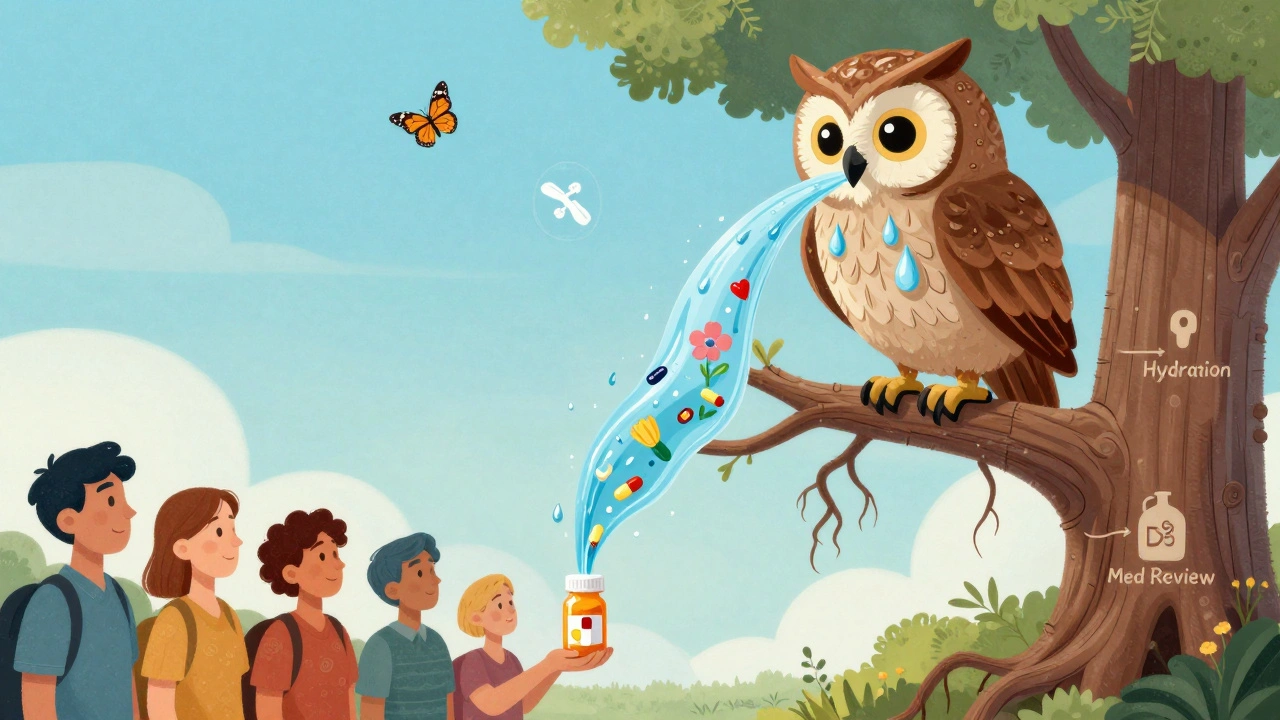
- Review your meds. Make a list of everything you take-prescription, OTC, supplements. Bring it to every appointment. Ask: “Could any of these hurt my kidneys?”
- Stay hydrated. Especially before and after imaging scans or if you’re on antibiotics. Water isn’t just good for you-it’s a kidney shield.
- Don’t self-medicate. Taking ibuprofen for a week straight? That’s not harmless. Even a few days can trigger injury in vulnerable people.
- Use acetaminophen instead. For pain relief, it’s far safer for kidneys than NSAIDs-when used within limits (no more than 3,000 mg/day).
One patient, MaryK_65, had her eGFR drop to 52 after years of naproxen. Her cardiologist switched her to acetaminophen. Within two weeks, her kidney function stabilized. No hospitalization. No dialysis. Just a smarter choice.
The Bigger Picture
Drug-induced kidney injury isn’t just a medical problem-it’s a financial one. In the U.S., each DI-AKI hospitalization costs an average of $18,450. That’s 2.3 times more than a typical non-AKI admission. And it’s estimated that $1.2 billion in healthcare spending each year goes to treat kidney damage that could have been avoided.
New tools are emerging. In 2024, the FDA approved the first AI-powered system (Dosis Health) that predicts which patients are at highest risk for drug-induced kidney injury-and alerts doctors before the drug is even prescribed. Early results show a 41% drop in cases.
But technology alone won’t fix this. The real solution is awareness. Doctors need to ask. Patients need to speak up. And everyone needs to understand: your kidneys don’t scream before they fail. They whisper. You have to listen.
When to Call Your Doctor
If you’re taking any of these drugs and notice any of these signs, contact your provider immediately:
- Urine output drops suddenly
- You feel unusually tired, nauseous, or confused
- You develop a rash or fever after starting a new medication
- Your creatinine level has risen since your last test
- You’ve been dehydrated or haven’t been drinking enough fluids
Don’t wait for a crisis. A simple blood test can catch kidney damage before it becomes permanent.
15 Comments
Write a comment