Have you ever woken up with a dull ache around your temples, only to realize it’s not just stress? Or perhaps you’ve felt a sudden, piercing pain behind one eye that makes you want to pace the room instead of lying down. These aren’t just different flavors of discomfort-they are distinct neurological conditions with unique causes, symptoms, and treatments. Understanding the difference between tension-type headaches, migraines, and cluster headaches is crucial because treating them incorrectly can lead to prolonged suffering and wasted time.
According to the International Classification of Headache Disorders (ICHD-3), these three categories make up the bulk of primary headache disorders. Misdiagnosis happens in up to 50% of cases, often because patients describe their pain vaguely or doctors overlook specific accompanying symptoms. This guide breaks down exactly how to tell them apart, what triggers them, and why getting the right diagnosis matters for your quality of life.
The Silent Majority: Tension-Type Headaches
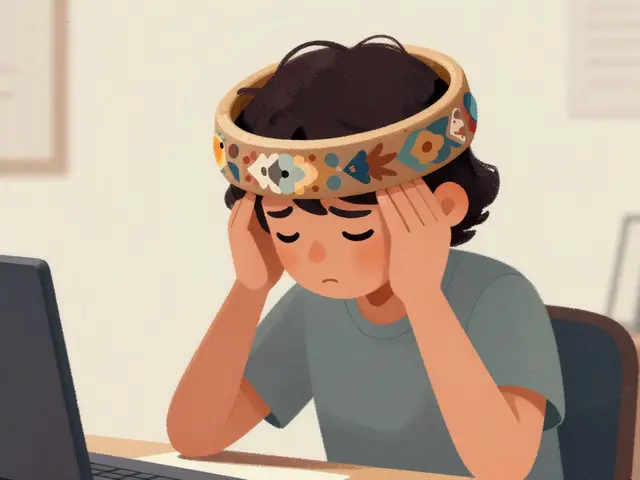
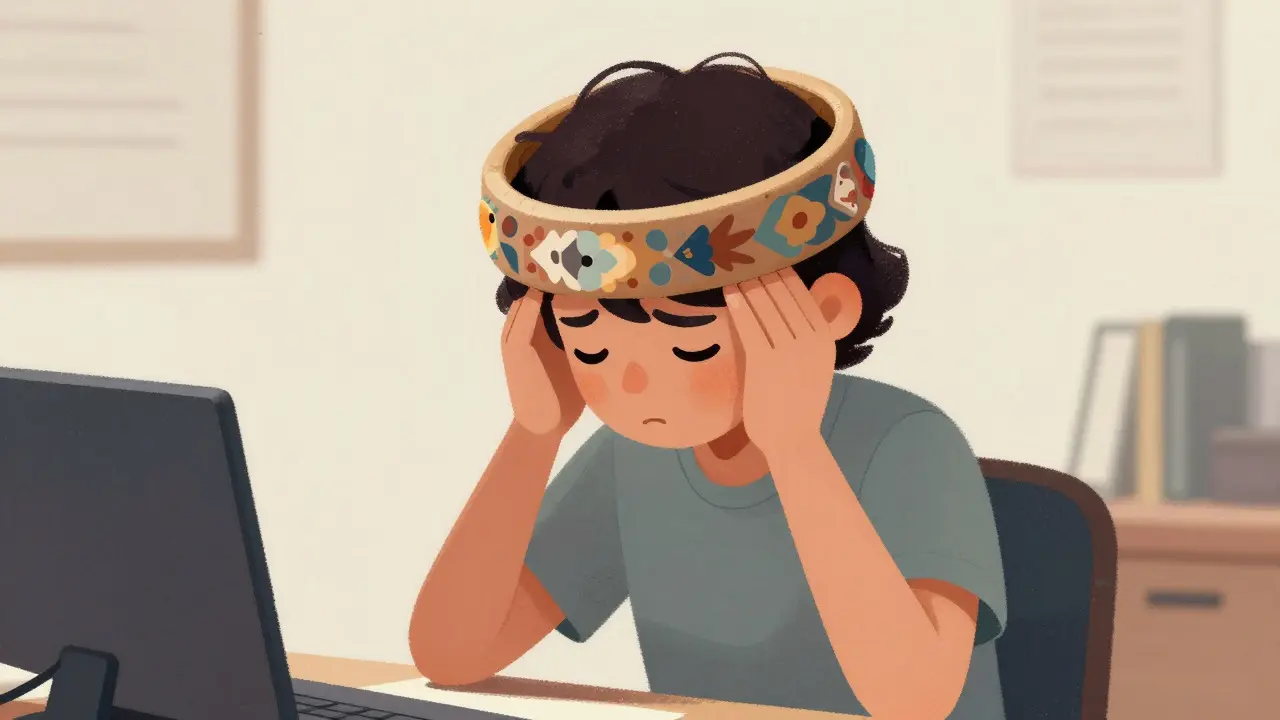
If you have ever felt like someone tightened a vice around your head, you likely experienced a tension-type headache. It is the most common headache disorder globally, affecting roughly 42% of people at some point in their lives. Unlike migraines or cluster headaches, tension headaches are generally not disabling. You can usually keep working, though it might be difficult to concentrate.
The pain is typically bilateral, meaning it affects both sides of your head. Patients often describe it as a "hatband" sensation-a tight band squeezing across the forehead, temples, or back of the head. The intensity ranges from mild to moderate. Crucially, routine physical activity does not worsen the pain. If running around with your kids makes your head throb more, it’s probably not a tension headache.
Key characteristics include:
- Pain Quality: Pressure-like, squeezing, non-pulsating.
- Duration: Episodic attacks last from 30 minutes to 7 days. Chronic tension headaches occur on 15 or more days per month for at least three months.
- Associated Symptoms: Minimal. You might feel slight sensitivity to light or sound, but nausea is rare.
- Prevalence: Affects women 1.4 times more frequently than men.
Tension headaches involve peripheral mechanisms, such as muscle tension in the neck and scalp, combined with central pain modulation abnormalities. Stress, poor posture, and lack of sleep are common triggers. For most people, over-the-counter NSAIDs like ibuprofen or acetaminophen resolve the pain effectively within an hour.
The Neurological Storm: Migraines
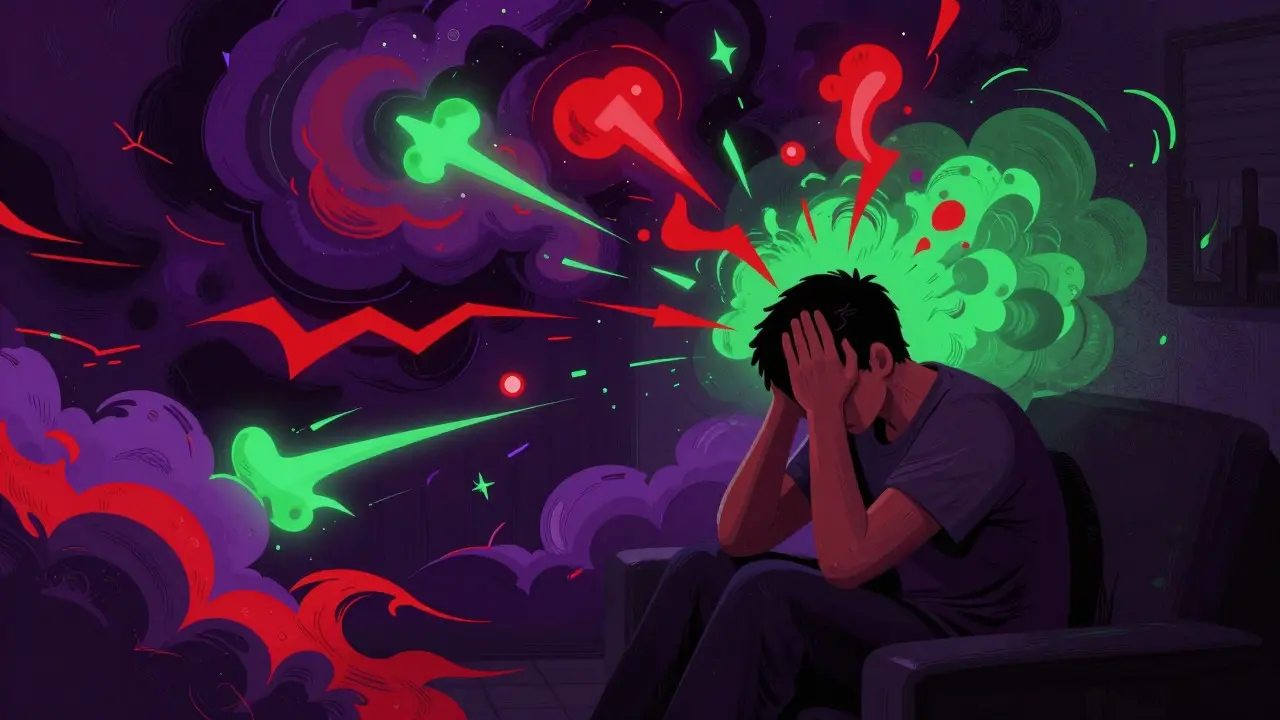
Migraines are far more than bad headaches; they are complex neurological events. About 20% of women and 10% of men worldwide suffer from migraines. The pain is often unilateral (one-sided) and pulsating, though about 40% of sufferers report bilateral pain. The intensity is moderate to severe, and unlike tension headaches, physical activity usually aggravates the pain. You won’t want to move; you’ll want to hide in a dark, quiet room.
What sets migraines apart are the associated symptoms. Nearly 90% of migraine attacks come with nausea, and 80% involve photophobia (sensitivity to light) and phonophobia (sensitivity to sound). Attacks last between 4 and 72 hours if untreated. Some people experience an "aura" before the pain starts-visual disturbances like flashing lights, zigzag lines, or blind spots that develop 5 to 60 minutes prior. This aura occurs in about 25-30% of migraine sufferers.
The underlying mechanism involves cortical spreading depression and trigeminovascular activation. Essentially, electrical waves spread across the brain, triggering inflammation in the blood vessels surrounding the brain. Common triggers include hormonal changes, certain foods (like aged cheese or processed meats), weather changes, and stress.
Treatment requires more than simple painkillers. Triptans and newer CGRP inhibitors are standard therapies, offering 50-70% efficacy rates. Preventative strategies often include lifestyle modifications, identifying triggers, and daily medication for those with frequent attacks.
The Clockwork Agony: Cluster Headaches
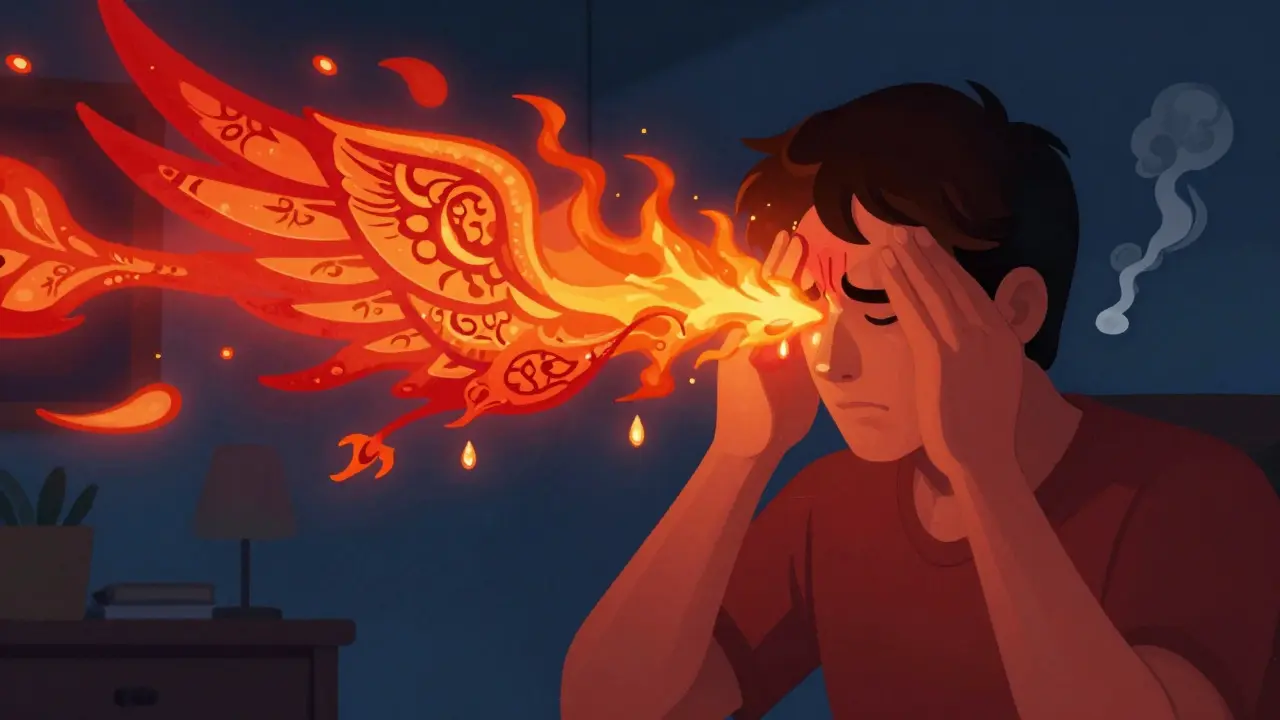
Cluster headaches are the rarest of the three, affecting only about 1 in 1,000 adults. However, they are often described as the most painful condition known to medicine. Patients rate the pain as 8 to 10 on a scale of 10, with some comparing it to childbirth or being stabbed in the eye. Unlike migraine sufferers who seek stillness, cluster headache patients often pace, rock, or bang their heads during an attack due to intense restlessness.
The pain is strictly unilateral, focused around or behind one eye or temple. Attacks are short but frequent, lasting 15 to 180 minutes, with an average duration of 45 to 90 minutes. During a "cluster period," which lasts 6 to 12 weeks, patients may experience 1 to 8 attacks per day, often at the same time each day or night. Seasonal patterns are common, with many people experiencing clusters in spring or autumn.
A defining feature of cluster headaches is the presence of ipsilateral autonomic symptoms on the same side as the pain. You will likely see:
- Lacrimation (tearing) in 90% of cases.
- Conjunctival injection (red eye) in 85% of cases.
- Nasal congestion or runny nose in 80% of cases.
- Ptosis (drooping eyelid) in 40% of cases.
These symptoms occur because cluster headaches belong to the trigeminal autonomic cephalalgias (TACs) family, characterized by hypothalamic activation. Alcohol consumption during a cluster period can trigger an attack almost immediately, so avoidance is critical. High-flow oxygen therapy and subcutaneous sumatriptan are the gold standards for acute relief, with efficacy rates of 70-80%.
Comparing the Three: Key Diagnostic Differences
Distinguishing between these headaches can be tricky, especially since symptoms can overlap. For instance, some migraineurs experience autonomic features like tearing or red eyes, leading to misdiagnosis as cluster headaches in about 20% of emergency department evaluations. Here is a breakdown of the critical differentiators.
| Feature | Tension-Type | Migraine | Cluster |
|---|---|---|---|
| Pain Location | Bilateral (both sides) | Unilateral (one side) or bilateral | Strictly unilateral (one side) |
| Pain Quality | Pressure, squeezing, "hatband" | Pulsating, throbbing | Excruciating, stabbing, orbital |
| Duration | 30 mins - 7 days | 4 - 72 hours | 15 - 180 minutes |
| Frequency | Episodic or chronic | Variable, often monthly | 1-8 per day during cluster periods |
| Nausea/Vomiting | Rare | Common (90%) | Uncommon |
| Light/Sound Sensitivity | Mild or none | Severe (Photophobia/Phonophobia) | Mild or none |
| Autonomic Symptoms | Absent | Occasional (tearing, redness) | Prominent (tearing, redness, congestion) |
| Patient Behavior | Continues normal activities | Seeks stillness, darkness | Paces, restless, agitated |
A critical diagnostic pitfall is the term "cluster migraine." As headache specialist Dr. Shivang Joshi notes, this is not a real diagnosis. Clustering of migraine attacks does not constitute a cluster headache. If you have migraines that happen frequently, you still have migraines, not cluster headaches. The presence of prominent autonomic symptoms and the specific timing/duration are what define cluster headaches.
Why Diagnosis Matters: Treatment Implications
Getting the right label isn’t just semantics; it dictates your treatment path. Taking triptans for a tension headache is unnecessary and potentially wasteful. Conversely, relying on ibuprofen for a cluster headache attack is often ineffective because the pain peaks too quickly for oral medications to work.
For tension headaches, the focus is on relaxation, posture correction, and occasional NSAID use. Overuse of painkillers can lead to medication-overuse headaches, so moderation is key. For migraines, early intervention with triptans or gepants (CGRP antagonists) is essential to stop the cascade of neurological events. Preventative care includes tracking triggers via a headache diary and considering daily prophylactic medications if attacks are frequent.
Cluster headaches require rapid-acting treatments. High-flow oxygen (100% oxygen at 12-15 liters per minute) is highly effective and has no side effects. Subcutaneous sumatriptan injections provide relief within 10-15 minutes. Verapamil is commonly used for prevention during cluster periods. Newer options like atogepant (Qulipta) have shown promise in reducing weekly attack frequency.
The economic impact of misdiagnosis is significant. Migraines alone cost the US economy $36 billion annually in direct medical costs and lost productivity. Accurate diagnosis ensures patients receive appropriate care, reducing disability scores and improving quality of life. Cluster headache patients, for example, often face high disability levels (MIDAS grade IV) if untreated, but effective therapy can restore function.
Practical Steps for Better Diagnosis
If you struggle with recurrent headaches, start by keeping a detailed headache diary. Record the date, time, duration, location, intensity (0-10 scale), associated symptoms, and potential triggers. Do this for at least four weeks before seeing a doctor. This data helps neurologists identify patterns that distinguish tension, migraine, and cluster headaches.
Be prepared to discuss your behavior during attacks. Do you lie down or pace? Do you need darkness? Does alcohol trigger immediate pain? These details are crucial for differential diagnosis. Don’t hesitate to seek a second opinion if your current treatment isn’t working. Headache medicine is a specialized field, and expertise varies among general practitioners.
Remember, headache disorders are manageable. With the right diagnosis and treatment plan, you can reduce frequency, severity, and disability. Whether it’s the pressure of tension, the storm of migraine, or the clockwork agony of cluster headaches, understanding your condition is the first step toward relief.
Can you have both migraine and cluster headaches?
Yes, it is possible to have both conditions, though it is relatively rare. Some patients experience migraines for years before developing cluster headaches later in life. It is important to track symptoms carefully to ensure each type is treated appropriately, as the acute medications differ significantly.
What is the main difference between a tension headache and a migraine?
The main differences are pain quality, associated symptoms, and impact on activity. Tension headaches cause mild-to-moderate pressure-like pain without nausea or severe sensitivity to light/sound, allowing you to continue daily activities. Migraines cause moderate-to-severe pulsating pain, often with nausea, vomiting, and extreme sensitivity to light and sound, typically forcing you to rest in a dark room.
How long do cluster headaches last compared to migraines?
Cluster headaches are much shorter but more frequent. Individual attacks last 15 to 180 minutes, occurring 1 to 8 times per day during active periods. Migraine attacks last longer, typically 4 to 72 hours if untreated, and occur less frequently, often once a month or less depending on the individual.
Are cluster headaches more common in men or women?
Cluster headaches are significantly more common in men, with a ratio of about 3:1 compared to women. In contrast, migraines are more prevalent in women (20%) than men (10%). Tension-type headaches also affect women more frequently than men (1.4 times).
What should I do if OTC painkillers don't help my headache?
If over-the-counter medications like ibuprofen or acetaminophen fail to relieve your headache, consult a healthcare provider. Persistent headaches may indicate migraines or cluster headaches, which require prescription treatments like triptans, CGRP inhibitors, or oxygen therapy. Keeping a headache diary can help your doctor make an accurate diagnosis.